




Keeping up with regular maintenance is one of the best ways to protect your vehicle and avoid bigger repair bills down the road.
Many drivers are unsure whether they should take their car to a dealership or trust a local mechanic, especially when prices, warranties, and service recommendations can vary widely.
The choice can affect not only how much you spend, but also how confident you feel about the quality of the work and the advice you receive.
In this guide, you’ll learn the key differences between dealer service and local mechanics, the pros and cons of each option, and how to decide which is the better fit for your vehicle and budget.
Ready to Sell? We’re Ready to Buy!
No Hassle, Just Cash – Book Your Free Pickup or Quote Today!
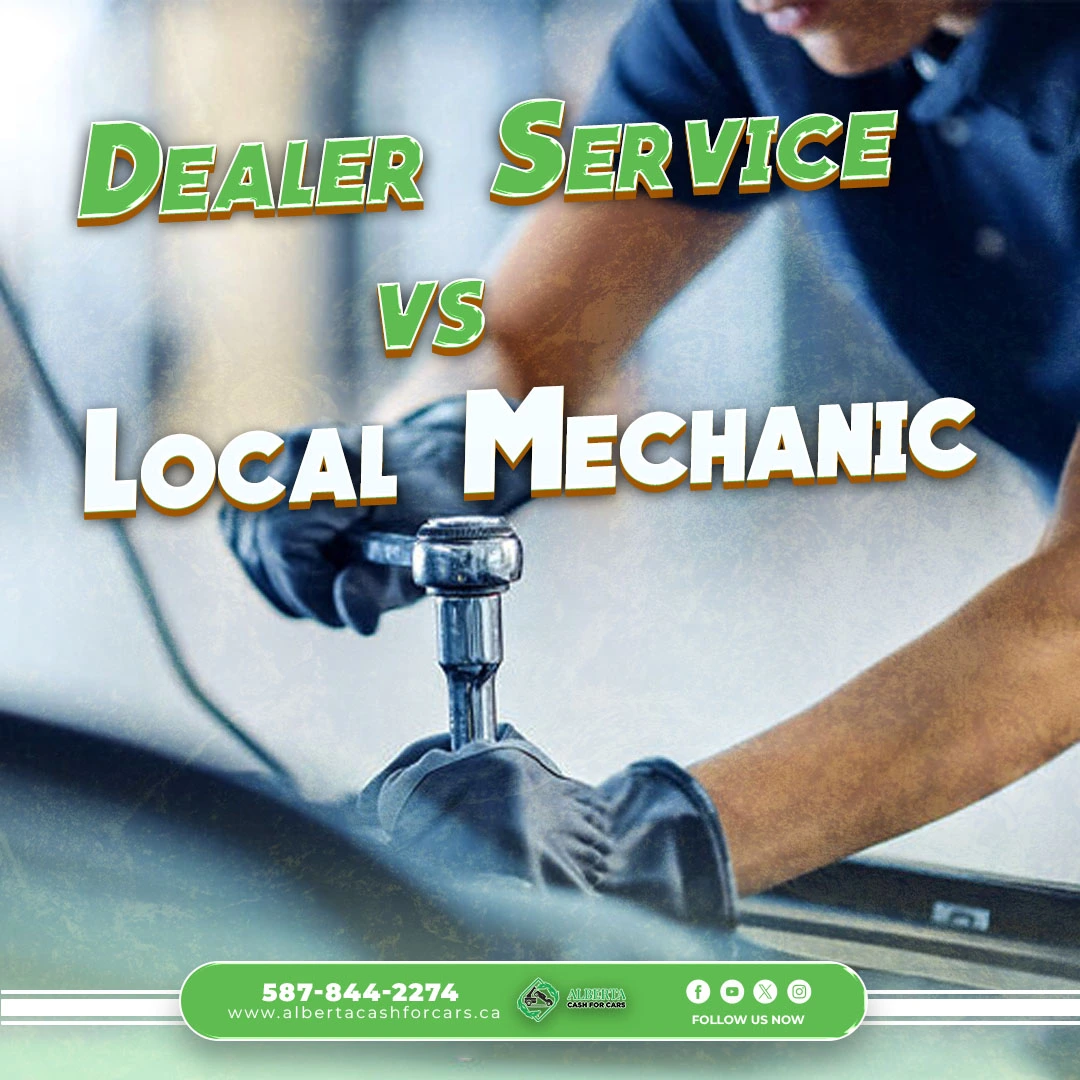
Dealer Service vs Local Mechanic - Which One Is Right for Your Car?
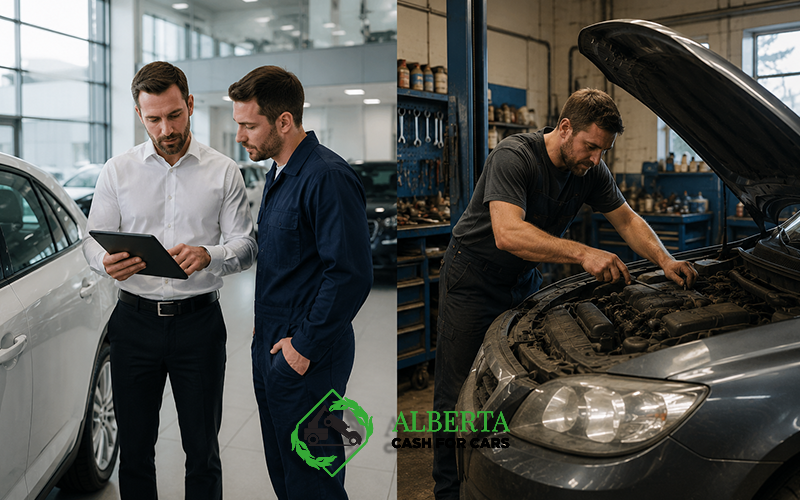
The honest answer is that both have a place, and the right choice depends on the work being done. Dealerships are usually the better call for newer cars under warranty, recall repairs, and complex software issues. A trusted local mechanic typically wins on price, convenience, and personal service for routine maintenance and older vehicles. Knowing where each one shines keeps you from overpaying or getting stuck with poor workmanship.
When a Dealership Makes Sense
Dealer service shops specialize in one brand, so their technicians know your model inside and out. They use manufacturer parts, have access to the latest software updates, and can perform warranty work or recall repairs at no cost. If your car is under three years old or still covered by a powertrain warranty, the dealership is often the smartest stop. They’re also worth visiting for transmission rebuilds, electronic system failures, or anything tied to advanced driver assistance features, where specialized diagnostic tools really make a difference.
When a Local Mechanic Is the Better Choice
Independent shops shine for routine maintenance like oil changes, brake jobs, suspension work, and exhaust repairs. Labour rates run noticeably lower than dealer pricing, sometimes by half. A good local mechanic also takes the time to explain what’s wrong without rushing through an upsell list. For cars older than five or six years, or anything out of warranty, this is usually the more practical option. You’ll often build a relationship with someone who remembers your car, your driving habits, and what was repaired last visit.
How to Decide Between the Two
Look at three things: the age of your vehicle, the type of repair, and the warranty status. Newer cars with active coverage almost always belong at the dealer. Older vehicles needing standard upkeep belong with an independent shop. For grey areas, ask for written estimates from both and compare side by side. Check online reviews, ask neighbours for recommendations, and look for certifications like Red Seal or ASE. Don’t just chase the lowest price; consistency, honesty, and warranty on parts and labour matter just as much as the final bill.
Related Post:
What Affects the Cost of Car Repairs?
Several factors can swing your repair bill by hundreds of dollars, and understanding them helps you ask sharper questions when the estimate lands.
Labour rates are the biggest variable.Parts are the next major factor. OEM (original equipment manufacturer) parts cost more than aftermarket alternatives but match factory specifications exactly.
The age and condition of your vehicle play a role too. Rusty bolts, seized hardware, and worn surrounding components can turn a one-hour job into a half-day project. Mechanics in colder regions like Alberta deal with this constantly thanks to road salt and freeze-thaw cycles.
Is Your Car Worth the Next Big Repair?
Sometimes the smartest move isn’t choosing between a dealership and a local mechanic; it’s deciding whether the repair is worth doing at all. If the estimate is creeping toward the value of the car, or breakdowns are becoming a monthly habit, selling for cash often makes more sense than another round of fixes.
- Request a free quote online or by phone.
- Review the offer and schedule a convenient pickup time.
- Let the professionals handle towing and paperwork.
- Receive payment the moment your car is picked up.
It’s a clean exit from a money pit, with no listing photos or test drives required.
Conclusion
Choosing between dealer service and a local mechanic depends on your vehicle, your budget, and the type of repairs you need. Dealerships can be a good fit for newer vehicles and warranty work, while independent mechanics often provide more affordable service and a more personal experience.
In my experience, the best option is the one that offers honest advice and clear pricing. If repair costs start to outweigh the value of your car, Alberta Cash for Cars offers a practical way to sell the vehicle and put that money toward your next decision.
Frequently Asked Questions
Is dealer service better than a local mechanic?
Not necessarily. Dealerships are often ideal for warranty work and brand-specific repairs, while reputable local mechanics can provide equally reliable service at a lower cost for routine maintenance and general repairs.
Will using a local mechanic void my warranty?
In most cases, no. As long as maintenance is performed according to the manufacturer’s recommendations and proper records are kept, you can usually use an independent mechanic without affecting your warranty.
Are dealership repairs more expensive?
Dealer service departments often charge higher labor rates and may use original manufacturer parts, which can increase costs. Local mechanics frequently offer more affordable options.
How do I know when a repair is not worth it?
A repair may not make sense when the cost is close to or greater than the value of the vehicle, especially if additional problems are likely to appear soon.