



In Alberta, roughly two thirds of fatal collisions happen in rural areas, and most of those take place on highways. Speed is a contributing factor in about a quarter of fatal crashes, and animal strikes drive a big share of rural highway accidents. Highway driving brings higher speeds, longer distances, and faster-changing conditions than city streets, so a small mistake can have serious consequences. This guide breaks down practical highway driving tips for Alberta drivers, from merging and lane discipline to passing, weather, and emergencies.
Ready to Sell? We’re Ready to Buy!
No Hassle, Just Cash – Book Your Free Pickup or Quote Today!
Prep Your Car Before You Hit the Highway
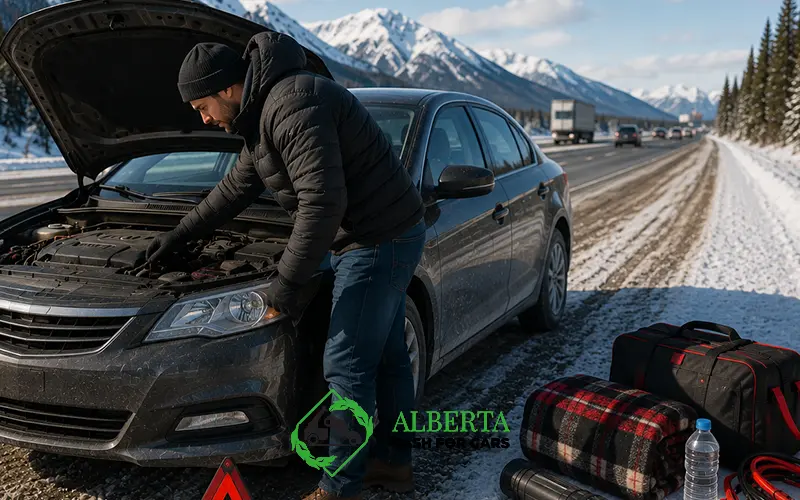
Highway driving puts more stress on your vehicle. A small problem in town can turn into a full breakdown at 110 km/h. Before you head out, check:
- Tire pressure and tread depth
- Brakes for any pulling, grinding, or soft pedal
- Engine oil, coolant, and washer fluid
- Lights and turn signals
- Fuel level and weather forecast for your route
In winter, also pack an emergency kit with a blanket, flashlight, jumper cables, water, and snacks. Help can be hours away on quieter stretches.
Merge Smoothly and Match Traffic Speed
Merging is one of the most stressful parts of highway driving for new drivers. The key is to match the speed of traffic before you enter the lane. Use the merge lane to accelerate, signal early, check your blind spot, and find a gap. Don’t slow down or stop unless you have to. Treat the merge as a smooth transition, not a hesitation.
Keep Right Except to Pass
In Alberta, the left lane is for passing slower traffic, not cruising. Signs along the QEII and other divided highways spell it out: keep right, except to pass. Driving slowly in the left lane can block traffic flow and lead to a fine. Stay in the right lane unless you’re actively overtaking a slower vehicle, then return when it’s safe.
Maintain a Safe Following Distance
At highway speeds, you cover a lot of ground in a short time. Use the two-second rule on dry roads and at least four seconds in rain, snow, or fog. Pick a fixed point ahead, count after the car in front passes it, and back off if you reach the same spot too quickly. Tailgating is one of the most common causes of rear-end crashes on Alberta highways.
Watch for Wildlife on Rural Highways
Animal strikes are a major risk on Alberta highways, especially at dawn, dusk, and overnight. Deer, moose, and even cattle wander onto rural roads. Scan the shoulders, slow down through wildlife zones, and use high beams in dark, empty areas when it’s safe to do so. If an animal jumps in front of you, brake firmly but try not to swerve, since swerving often causes worse outcomes than the strike itself.
Drive for Alberta Weather
Highway conditions can shift fast. Snow, black ice, fog, chinook winds, and sudden rain all change how your car handles. In rough weather:
- Slow down well below the posted limit
- Increase your following distance
- Use low beams in fog
- Skip cruise control on slippery roads
- Pull over and wait if visibility drops badly
Final Word
Car ownership in Canada isn’t going anywhere soon, but it’s changing. Costs are climbing, environmental concerns are growing, and more Canadians are weighing whether one car, or any car, still makes sense for their household. In Alberta, where winters are long and distances are wide, most drivers will keep relying on personal vehicles, but the way they buy, finance, and replace them is shifting.
The smart move is to know your real costs, compare them against your needs, and stay open to changes that save money or hassle. Whether that means keeping your current car longer or moving on from it, the choice should fit your lifestyle and your budget.
Speed, distracted driving, and animal strikes are top causes. About a quarter of fatal crashes in Alberta involve unsafe speed, and rural highways see a high rate of wildlife collisions. Staying within the limit and scanning the road ahead lowers both risks.
Stick to the posted speed limit, which is usually 100 km/h on most divided highways and 110 km/h on the QEII between Calgary and Edmonton. Slow down for weather, construction, and reduced visibility, even if the posted limit is higher.
Pull onto the shoulder as far right as you can, turn on your hazard lights, and stay buckled inside the car if traffic is heavy. Call for help or roadside assistance. Only step out if you can do so safely and away from traffic.
Cruise control is fine on dry, open stretches with steady traffic. Avoid it in rain, snow, fog, or ice, since it can cause loss of control if your tires slip. Stay alert either way, since cruise control can make fatigue worse on long drives.
Sources
Alberta Cash for Cars uses only trusted, high-quality sources to ensure the information in our articles is accurate, reliable, and up to date.
ences & Further Reading
- Government of Alberta. (2024). Speed Limits and Road Safety in Alberta. Retrieved from alberta.ca
- Transport Canada. (2024). Wildlife-Vehicle Collisions in Canada. Retrieved from tc.canada.ca
- Canadian Automobile Association. (2024). Highway Driving Safety Resources. Retrieved from caa.ca
- Alberta Transportation. (2024). Driver’s Handbook. Retrieved from alberta.ca