





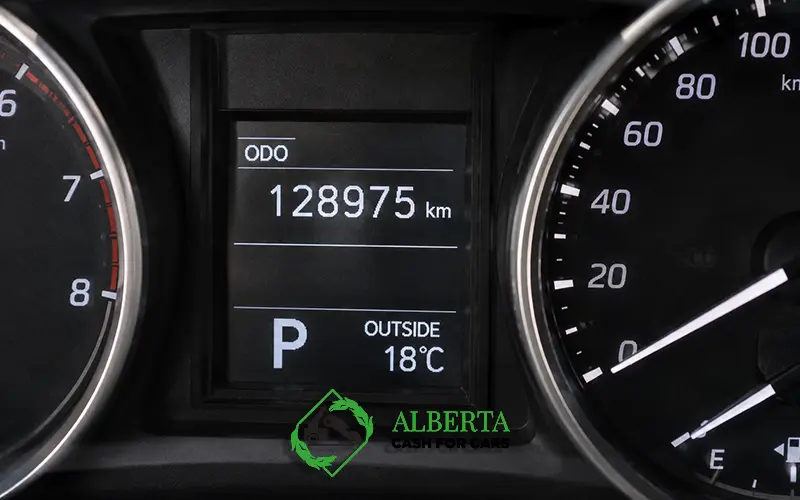
That six-digit number on your odometer carries more weight than almost anything else when it comes time to sell or trade in your vehicle. Two cars from the same year, same model, same color can be separated by thousands of dollars based on mileage alone.
Most owners only realize how much it matters when the first lowball offer lands or comparable listings start popping up online. Mileage tells buyers a story about how hard the car has worked, what’s likely to wear out next, and how many trouble-free kilometres are left. Knowing what shapes that number’s impact puts you in a much stronger position when negotiating.
In this blog, you’ll learn the key factors that influence how mileage affects your car’s value and what buyers pay attention to when evaluating a used vehicle.
Ready to Sell? We’re Ready to Buy!
No Hassle, Just Cash – Book Your Free Pickup or Quote Today!
Understanding How Mileage Affects Car Value
Mileage is one of the top three factors any buyer or dealer examines, alongside age and overall condition. As a rough rule, the average Canadian driver covers about 15,000 to 20,000 kilometres a year. Anything well above that hurts resale value, while lower-than-average mileage adds a premium. Beyond the raw number, the way those kilometres were driven and recorded matters just as much as the figure itself.
How Mileage Affects the Value of Your Car
Mileage gives buyers a general idea of how much wear and tear a vehicle has experienced. In most cases, lower mileage is associated with less use and a potentially longer remaining lifespan. However, mileage is only one part of the overall picture.
A well-maintained vehicle with higher mileage can still hold solid value, while a neglected car with fewer kilometres may be worth less than expected. Buyers usually consider mileage together with the car’s age, condition, service history, and reputation for reliability.
Vehicle Age and Typical Usage
Mileage is most meaningful when compared with the age of the vehicle. A newer car with unusually high kilometres may raise concerns, while an older vehicle with similar mileage may be considered perfectly normal.
In Canada, many vehicles accumulate around 20,000 to 25,000 kilometres per year, so buyers often use this range as a rough benchmark.
Maintenance History
Regular maintenance can make a major difference in how buyers view a high-mileage vehicle. Oil changes, brake service, timing belt replacements, and other documented work help demonstrate that the car has been cared for properly.
If you have kept service records, they can reassure buyers and support a stronger asking price.
Make and Model Reputation
Some vehicles are known for remaining reliable well past 300,000 kilometres. Cars and trucks with strong reputations for durability tend to retain more value, even when the odometer reading is higher than average.
Overall Condition
Mileage is important, but buyers also examine the engine, transmission, suspension, body, interior, and tires. A clean and well-maintained vehicle can often outperform expectations, regardless of the number on the odometer.
When High Mileage Starts to Affect Resale Value More Significantly
As vehicles accumulate more kilometres, buyers begin to anticipate major maintenance and repair costs. Components such as the transmission, suspension, and cooling system may require attention, which can reduce the amount buyers are willing to pay.
This does not mean a high-mileage vehicle has no value. It simply means buyers become more selective and focus more heavily on maintenance records and overall condition. If your car is approaching major service intervals, our articles on Car Maintenance by Mileage and What Mileage Should I Sell My Car offer useful guidance on what to expect.
When Repairs No Longer Make Financial Sense
If your vehicle has high mileage and is starting to require expensive repairs, selling it may be a more practical decision than continuing to invest in maintenance.
- Request a free quote. Share your vehicle’s make, model, year, condition, mileage, and location.
- Review the offer and choose a pickup time. If the price works for you, select a convenient time for removal.
- Let the professionals handle towing and paperwork. The vehicle is picked up at no extra cost, and the ownership transfer is taken care of for you.
- Receive payment on pickup. Once the vehicle is loaded, you are paid immediately with no waiting and no hidden fees.
For many owners, this is the simplest way to turn a high-mileage vehicle into cash and avoid further repair costs.
Conclusion
Mileage plays an important role in determining how much a car is worth, but it is only one part of the equation. Buyers also consider maintenance history, vehicle condition, reliability, and anticipated repair costs when deciding what they are willing to pay.
In my experience, a well-maintained high-mileage vehicle can still attract a fair offer. When repairs begin to outweigh the value of the car, Alberta Cash for Cars provides a straightforward way to sell the vehicle and move on.
Frequently Asked Questions
How much does mileage affect car value?
Mileage can significantly influence resale value because it reflects the amount of wear and tear on the vehicle. However, maintenance history and overall condition often have just as much impact.
Is 200,000 kilometres considered high mileage?
Is 200,000 kilometres considered high mileage?
Can a high-mileage car still be worth good money?
Yes. Vehicles with complete service records, strong mechanical condition, and popular makes and models can still hold respectable value even with higher mileage.
Should I sell my car before major repairs are needed?
Many owners choose to sell when the vehicle approaches expensive maintenance milestones, especially if repair costs are close to or greater than the car’s market value.