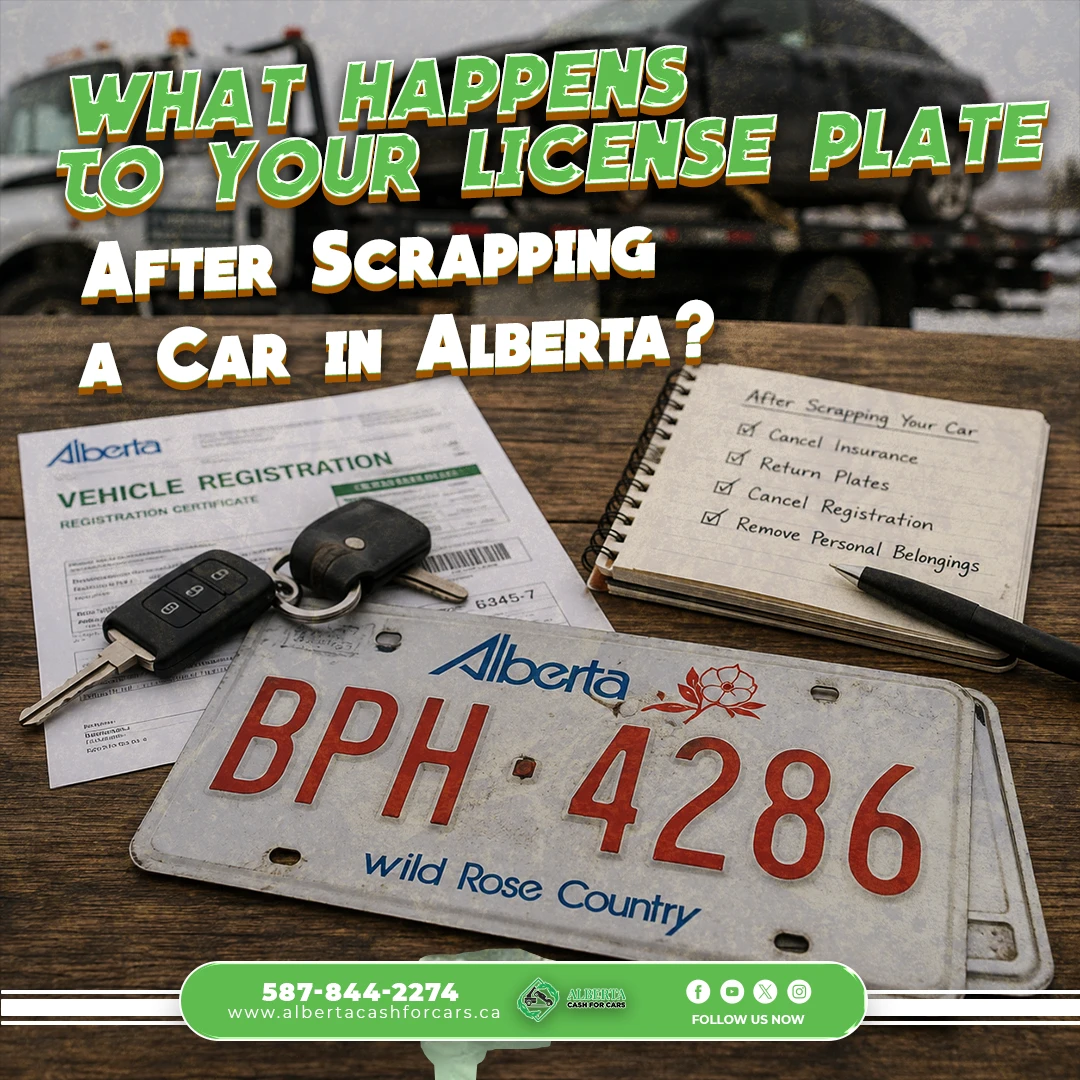



Scrapping a car deals with the vehicle. Your license plate is a separate matter entirely, and mixing the two up is one of the more common mistakes Alberta sellers make. In Alberta, plates belong to the registered owner, not the vehicle itself, which means they don’t leave your property along with the car, and they don’t automatically get cancelled just because the vehicle is gone.
Â
Left unresolved, that gap can mean paying for registration on a car you no longer own, or discovering months later that a simple step got missed entirely. This guide walks through exactly what to do with your plates, your registration, and your insurance once a vehicle is scrapped, in the right order.
Ready to Scrap Your Vehicle the Right Way?
If you’re getting ready to scrap a car in Alberta and want the process handled properly from pickup through paperwork, cash for cars Calgary through Alberta Cash for Cars serves Calgary and more than 50 Alberta communities with straightforward, same-day service. Get a quote or email [email protected] for a free, no-obligation quote.
Do You Keep Your License Plates When You Scrap a Car in Alberta?
Yes, and this is worth understanding clearly before pickup day. Alberta license plates are issued to the registered owner, not tied to a specific vehicle, so they remain associated with you until they’re transferred, returned, or cancelled through a registry agent, regardless of what happens to the car itself. This surprises a lot of first-time sellers who assume plates work the way they do in some other provinces, where they’re more closely tied to the vehicle rather than the person.
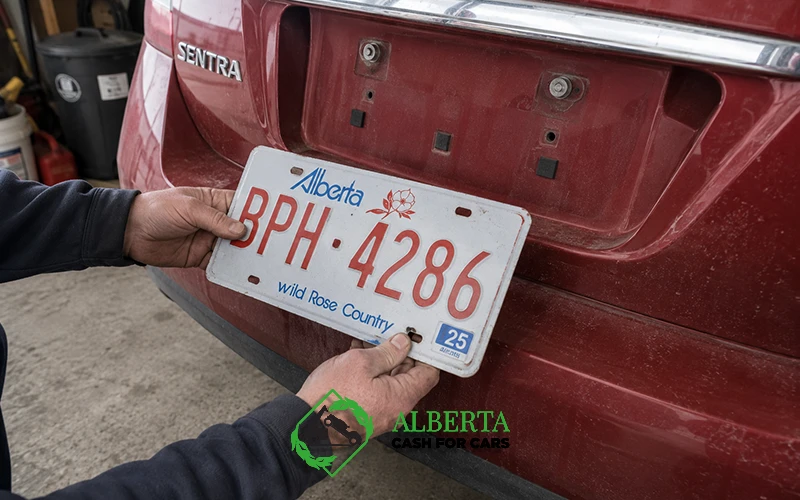
The plates need to be removed from the vehicle before it’s picked up for scrap, since nothing about the scrapping process transfers them to anyone else. Whoever picks up the vehicle for scrap has no use for your plates and no obligation to remove them for you, so it’s the seller’s responsibility to take them off beforehand, ideally right when the pickup is scheduled rather than as an afterthought once the tow truck has already arrived. Forgetting this step is easy to do in the rush of getting an old vehicle off your property, but it just creates an extra loose end to deal with afterward, since you’ll still need to go through the transfer or cancellation process eventually regardless of when you get around to it.
What Are Your Options Once the Plates Are Off?
Once you’ve removed your plates, there are two paths forward, and which one applies depends on whether you’re replacing the vehicle.
Can You Reuse Your Alberta Plates on Another Vehicle?
Yes. If you’re picking up a new or different vehicle, your existing plates can typically be transferred to it through a registry agent, rather than cancelled and reissued as something new. There’s no need to cancel the old registration first, the plate gets transferred directly through the registry process, usually in a single visit if you bring the right documentation for both vehicles. This is usually the simpler option if a replacement vehicle is already in the picture, since it skips the refund and reissue steps entirely and just carries your existing plate forward.
What If You're Not Replacing the Vehicle?
Return the plates to a registry agent and cancel the registration. This is the more common path when a scrapped vehicle isn’t being immediately replaced, whether that’s because you’re going without a vehicle for a while, switching to another mode of transportation, or simply haven’t decided on a replacement yet. The exact cost, refund amount, and timeline for this option are covered in detail in the next section.
How Do You Cancel Your Registration in Alberta?
If you’re not transferring your plates to another vehicle, cancelling the registration is the next step. You can do this through a registry agent, either in person or by mail, and which option makes more sense depends mostly on convenience and whether you still have the physical plate on hand.
| Method | What you'll need |
|---|---|
| In person | Acceptable ID, your licence plate, payment for the registry agent's service fee |
| By mail | Written request signed by all registrants on the registration certificate, a photocopy of your driver's licence, your current address for the refund, and the service fee |
In person is generally the faster route if you have a registry agent nearby, since it’s typically handled in a single visit. Mail matters most if you’ve already moved, don’t have easy access to a registry office, or the plate itself was already returned or lost separately from the cancellation process.
What Does Cancellation Cost, and Is There a Refund?
According to Alberta’s official guidance, a $10 plus GST cancellation fee is deducted from any refund owed. The registry agent’s own service fee is separate from this government fee and cannot be deducted from your refund, so expect to pay both regardless of how much time is left on your registration. If there’s unused time left on your registration, you’re eligible for a prorated refund of that remaining portion, paid by cheque, typically arriving within four to six weeks. If the refund doesn’t show up in that window, it’s often because the address on file is outdated or there’s an unpaid fine the refund gets applied against first.
What If You're Not Available to Cancel It Yourself?
Someone else can handle this on your behalf with a completed Authorization for Vehicle Services form, which is worth knowing if you’re dealing with a vehicle that’s changing hands or being scrapped on someone else’s schedule, or if you’ve already moved out of province and can’t easily get to a registry agent in person.
What Happens to Insurance After Scrapping a Car?
Your vehicle insurance doesn’t automatically cancel just because the vehicle is scrapped. It’s a completely separate relationship with your insurer, governed by your policy terms rather than anything that happens at the registry, which means it keeps running, and billing, until you actively contact your insurer and cancel it yourself.
Contact your insurer directly to cancel or update the policy once the vehicle is no longer yours. Coordinate the timing with your insurer so coverage remains in place until the vehicle has actually left your possession, rather than cancelling in advance and risking a gap if the pickup gets delayed or rescheduled. Depending on your policy, you may be eligible for a refund on the unused portion of your premium, which is worth confirming directly with your insurer rather than assuming it works one particular way, since refund structures vary between providers.
Three Real Scenarios Sellers Run Into
Different situations call for slightly different handling, and seeing how they play out helps clarify which applies to you.
- An old vehicle finally going to the scrap yard. The most straightforward case: remove the plates, arrange pickup, then decide whether to transfer or cancel based on whether a replacement vehicle is already lined up. Most sellers in this situation already know which path applies before the tow truck even arrives.
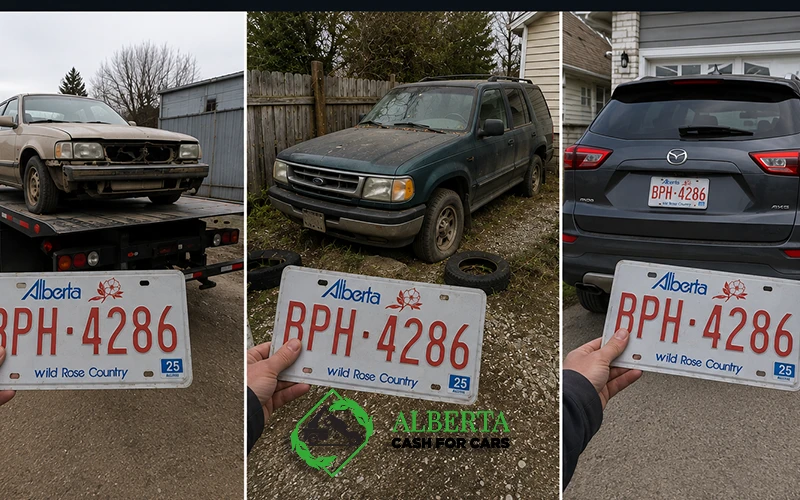
- A non-running vehicle being cleared off the property. The same process applies even if the vehicle hasn’t moved in years, plates and registration status don’t change just because the car has been sitting unused, so the same removal and cancellation steps still need to happen. It’s easy to assume a vehicle that’s been sitting that long has somehow already been dealt with administratively, but nothing changes on the registry side until you actually take action.
- An owner keeping their plates for a vehicle they already have. In this case, the plate gets transferred directly to the other vehicle through the registry, without needing to cancel the old registration first. This is often the fastest of the three scenarios, since there’s no refund to wait on and no cancellation paperwork involved.
What Else Should You Do Before the Vehicle Is Picked Up?
A few practical steps round out the process beyond plates and registration:
- Remove all personal items from the vehicle. Once it’s gone, anything left inside is gone with it, including things people commonly forget like garage door openers, toll transponders, or documents tucked into the glovebox.
- Keep your registration, bill of sale, and any cancellation confirmation. These documents matter if any question comes up later about the vehicle’s status, and having them on hand saves a scramble if you ever need to prove the vehicle was properly disposed of.
- Confirm your registration and insurance are both actually resolved, not just assumed to be handled, before considering the process finished. It’s worth calling both the registry and your insurer to double check rather than assuming a form submitted weeks ago went through cleanly.
This connects directly to the broader paperwork needed to sell a car, since the plate and registration steps covered here are really one part of a larger checklist that applies to any vehicle sale, scrap included.
What If Your Plates or Registration Are Already Missing?
This comes up more than people expect, especially with vehicles that have been sitting unused for a while. Missing plates or lapsed registration don’t necessarily prevent you from arranging disposal of the vehicle, but they can add documentation or registry steps to the process, and it’s worth sorting this out before pickup day rather than during it. Selling a car without plates and selling a car without registration are both genuinely common situations, and neither one is a dead end. A registry agent can walk you through what’s needed to sort out your specific case, whether that means a replacement document or an alternative form of proof.
How Does This Fit Into the Overall Scrapping Process?
Handling plates and registration is really the final stage of a larger sequence. The process of scrapping a car typically starts with getting a quote, then moves through pickup and payment, with plate removal and registration cancellation as the wrap-up steps once the vehicle is actually gone. Understanding where this fits in the bigger picture helps avoid treating it as an afterthought squeezed in after everything else feels finished.
Once it’s picked up, the vehicle typically moves through the auto recycling process, where usable parts and metal are separated out and recycled. That part of the journey is entirely separate from your plate and registration responsibilities, which follow their own process through the registry regardless of what happens to the vehicle afterward, on its own timeline that has nothing to do with how quickly the vehicle itself gets processed.
FAQs
Do you keep your license plates after scrapping a car in Alberta?
Should you remove plates before junk car pickup?
What happens to your registration after scrapping a car?
Can you reuse Alberta license plates on a different vehicle?
Do you need to cancel insurance after scrapping a car?
What if your plates or registration are already lost?
The Bottom Line
Scrapping a car in Alberta and dealing with your license plate are two separate processes that happen to overlap in timing. Plates stay associated with you as the registered owner, not the vehicle, so they need to come off before pickup regardless of what happens next.
From there, transferring them to a new vehicle or cancelling the registration, which carries a $10 plus GST government fee plus a separate registry agent service fee, are the two paths forward, and insurance needs its own coordinated cancellation with your provider once the vehicle is actually gone. Handling all three, plates, registration, and insurance, in the right order is what closes out the process cleanly instead of leaving something unresolved behind.
References
Sources
Alberta Cash for Cars uses only trusted, high-quality sources to ensure the information in our articles is accurate, reliable, and up to date.
- Government of Alberta – Cancel a vehicle registration, plate return and refund process
https://www.alberta.ca/cancel-vehicle-registration - AMA (Alberta Motor Association) – Cancel vehicle registration in Alberta
https://ama.ab.ca/registries/auto/vehicle-registration/cancel - Riverbend Registry – When and why to cancel your vehicle registration in Alberta
https://riverbendregistry.com/blog/when-and-why-to-cancel-your-vehicle-registration-in-alberta/ - AMVIC (Alberta Motor Vehicle Industry Council) – consumer guidance on buying and selling used vehicles
https://www.amvic.org/consumer/buying-a-vehicle/buying-used/ - Government of Alberta – Standard bill of sale
https://www.alberta.ca/standard-bill-sale
Ready to Scrap Your Vehicle the Right Way?
If you’re getting ready to scrap a car in Alberta and want the process handled properly from pickup through paperwork, cash for cars Calgary through Alberta Cash for Cars serves Calgary and more than 50 Alberta communities with straightforward, same-day service. Get a quote or email [email protected] for a free, no-obligation quote.