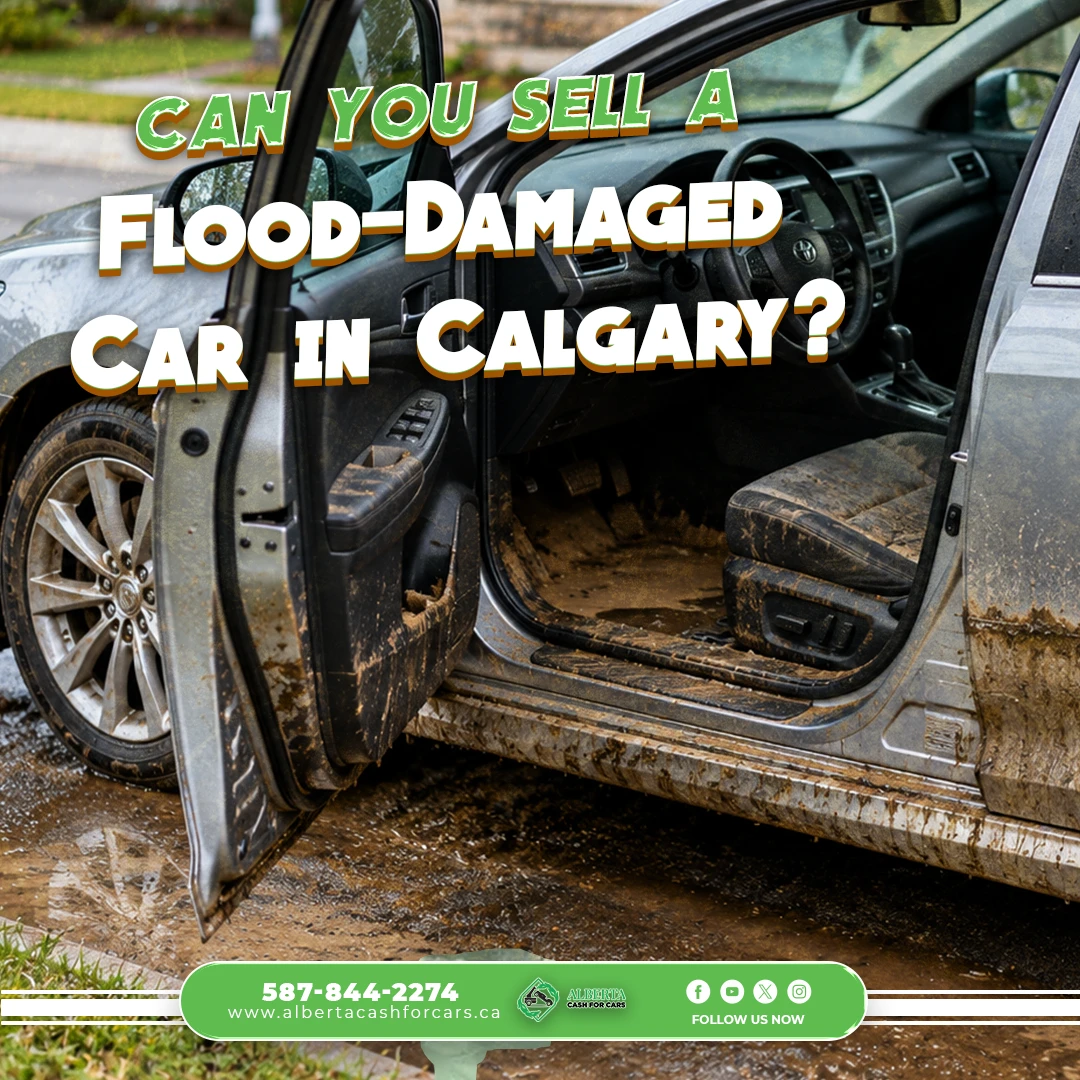





A car that had a few inches of water reach the floor mats during a heavy rainstorm is a different situation than one that sat submerged past the dashboard, even though both technically qualify as “flood damage,” and treating them the same way is how sellers either give away real value or unknowingly hide problems that surface months later. Alberta doesn’t ban the sale of a flood-damaged vehicle, what matters is knowing exactly what happened, being honest about it, and matching your approach to the actual severity.
This guide covers what determines a flood-damaged car’s value, when it crosses into total-loss territory, what you’re required to disclose, and your real selling options in Calgary.
Ready to Sell a Flood-Damaged Car?
Whether the damage was minor or the vehicle has already been declared a total loss, Alberta Cash for Cars evaluates vehicles based on real condition, flood history included. We serve Calgary and more than 50 Alberta communities. Get a quote or email [email protected] for a free, no-obligation quote.
Different Water Damage Types in Vehicles
The severity of the exposure determines almost everything else in this guide, so it’s worth being specific about which situation actually applies to your vehicle.
Minor Water Exposure
Water reached the floor area briefly, from a heavy rain, a sunroof leak, or similar, without soaking deeper components. This is the least serious category and often has minimal lasting impact if dried properly and quickly.
Interior Water Damage
Carpets, seats, and lower door panels were saturated for a longer period. This can lead to mold, persistent odour, and corrosion starting in areas that are hard to fully dry out, even when the visible cleanup looks complete.
Mechanical Water Damage
Water reached the engine compartment or drivetrain components. This is a more serious category, since water in an engine can cause damage well beyond what’s visible on the surface.
Electrical System Damage
Water reached wiring, sensors, or control modules, whether through the interior or the engine bay. Electrical damage can be particularly difficult to detect immediately, since corrosion in wiring, connectors, or modules can cause intermittent problems that surface later, long after a buyer has already taken ownership.
Severe Flooding
The vehicle was submerged well past the floor, often reaching the dashboard or higher. At this level, an insurer may determine repairing the vehicle isn’t economically justified, covered in more detail below.
Can You Legally Sell a Flood-Damaged Car in Calgary?
A private seller in Alberta doesn’t have the same Mechanical Fitness Assessment requirement that applies to automotive businesses, and flood damage by itself doesn’t automatically prevent a private sale. Alberta generally treats used vehicles in a private sale as sold “as is,” but that doesn’t make it appropriate to misrepresent the vehicle’s condition or history. A seller should be accurate about known flood damage and what was done to address it, covered in more detail below.

How Does Water Damage Affect a Car's Value?
The effect generally becomes more serious as water reaches more components and remains in contact with them longer, so duration and depth both play a role rather than depth alone.
Water damage can have lingering effects on a vehicle’s braking, steering, and electrical systems even when the car looks fine on the outside, which is exactly why buyers and insurers treat flood history as a more serious concern than comparable cosmetic damage.
A car with confirmed minor exposure and proper drying documentation is a very different sale than one where the extent of the water damage is unclear or undocumented, even if both currently start and run normally.
Can a Flood-Damaged Car Be Declared a Total Loss?
Yes. An insurer may declare a vehicle a total loss when repairing it isn’t economically justified relative to its value, though Alberta has no set legal threshold, and the exact decision depends on the insurer and the specific circumstances. Insurers commonly reference an industry guideline in the range of 70 to 80 percent of a vehicle’s actual cash value when making this call, a range used broadly across the Canadian insurance industry rather than a rule specific to any one province.
How the Process Works
- An insurer assesses the vehicle and estimates the repair cost against its overall value.
- If the insurer declares it a total loss, the vehicle’s status gets reported through Alberta’s vehicle registry system.
- The vehicle may be branded salvage or non-repairable, depending on the severity of the damage. Severe flooding that reaches deep into the passenger compartment often lands in the non-repairable category specifically, since Alberta’s inspection standards treat submersion reaching that level as more likely to compromise the vehicle beyond a viable repair.
- A salvage vehicle can potentially return to the road after the required repairs and a Salvage Vehicle Inspection, receiving a “rebuilt” status. A non-repairable vehicle cannot be re-registered and can only be sold as scrap or dismantled for parts.
This branding history becomes part of the vehicle’s record and can affect future registration and resale. If your flood-damaged vehicle has already gone through an insurance claim, selling a totaled car in Calgary and our salvage-title content cover what these statuses actually mean for a sale in more detail.
Do I Have to Disclose Flood Damage When Selling a Car?
Alberta generally treats used vehicles in a private sale as sold “as is,” but that framework doesn’t give a seller licence to misrepresent a vehicle’s condition or history. Being accurate about known flood damage, and what was done to address it, is the standard a private seller should hold themselves to.
Staying quiet about known water damage carries real practical risk too. Vehicle history reports can include weather damage and flood-related records, so a buyer doing basic due diligence has a real chance of finding out regardless of whether you mention it, though these reports only include what’s actually been reported to them, so they don’t guarantee every flood history will surface.
What’s worth disclosing:
- The extent of the exposure, which category above applies
- Whether it went through an insurance claim
- What was done to address it, drying, repairs, professional cleaning
Being upfront about this protects you from a dispute later and is simply the more honest way to handle a category of damage that’s genuinely harder for a buyer to fully assess on their own.
Should You Repair a Flood-Damaged Car Before Selling It?
This decision carries an extra layer of risk that a typical repair-vs-sell calculation doesn’t, because flood damage specifically can hide problems that a repair doesn’t fully resolve.
Repair generally makes sense when:
- The exposure was minor
- Drying was thorough and documented
- No electrical or mechanical systems were affected
Selling as-is generally makes more sense when:
- Water reached the electrical system or engine
- Residual moisture or corrosion in wiring, connectors, or modules is a real possibility
- You can’t fully verify the repair resolved the underlying risk
Residual moisture or corrosion in wiring harnesses, connectors, and control modules can cause problems later, even after a vehicle appears to operate normally. This is different from a dented panel, where a repair genuinely closes out the issue. That’s part of why many owners with mechanical or electrical water damage find that selling as-is, with full disclosure, is the more practical and defensible path.
Lorem ipsum dolor sit amet, consectetur adipiscing elit. Ut elit tellus, luctus nec ullamcorper mattis, pulvinar dapibus leo.
What Are Your Selling Options for a Flood-Damaged Car in Calgary?
A few paths exist depending on the severity and how much time you want to put into the sale.
Private sale with full disclosure works best for minor exposure or well-documented, thoroughly dried interior damage, where a buyer can reasonably assess the risk with accurate information from you.
A damaged-vehicle buyer is often the more practical route for mechanical or electrical water damage, since these buyers evaluate the vehicle’s actual condition rather than requiring it to be free of any history.
Selling for parts or recycling becomes more relevant specifically when a vehicle is branded non-repairable, or when the repair cost and overall condition make returning it to the road uneconomical even if it’s technically salvage-eligible.
Is a Flood-Damaged Car Worth Anything?
Yes, a flood-damaged vehicle can still have value. Even a vehicle with electrical damage or a total-loss designation retains value in its unaffected components and its scrap-metal value. The category of water damage determines how much that value is and who the right buyer is, but “flood-damaged” doesn’t mean “worthless,” it means the vehicle needs to be assessed and sold based on its actual condition and branding status rather than assumed to be a lost cause.
Ready to Sell a Flood-Damaged Car?
Whether the damage was minor or the vehicle has already been declared a total loss, Alberta Cash for Cars evaluates vehicles based on real condition, flood history included. We serve Calgary and more than 50 Alberta communities. Get a quote or email [email protected] for a free, no-obligation quote.
Common Questions
Can you sell a flood-damaged car in Calgary?
Is a flood-damaged car worth anything?
Should I repair a flood-damaged car before selling it?
Do I have to disclose flood damage when selling a car?
How does water damage affect a car's value?
Can a flood-damaged car be declared a total loss?
Can I sell a flood-damaged car for cash?
What is the best way to sell a water-damaged car?
The Bottom Line
Selling a flood-damaged car in Calgary is legal, and the real work is accurately identifying which category of water damage actually applies to your vehicle, since that determines its value, whether it’s headed toward a total-loss designation, and which selling path makes the most sense. Electrical and mechanical water damage carries a genuine hidden-risk problem that a repair doesn’t always fully resolve, which is why disclosure matters more here than with most other kinds of damage.
Whether you repair, sell privately with full disclosure, or sell to a direct buyer who evaluates real condition, the vehicle still holds value, the key is matching your approach to the actual severity of what happened and its current branding status.
References
Sources
Alberta Cash for Cars uses only trusted, high-quality sources to ensure the information in our articles is accurate, reliable, and up to date.
- CARFAX Canada — Accidents and damage history, total loss terminology and water damage effects
https://www.carfax.ca/vehicle-history/vehicle-history-report/accident-damage-history - AMVIC (Alberta Motor Vehicle Industry Council) — consumer guidance on buying and selling used vehicles
https://www.amvic.org/consumer/buying-a-vehicle/buying-used/ - Government of Alberta — Salvage vehicle inspections
https://www.alberta.ca/salvage-vehicle-inspections - Government of Alberta — Buying a used vehicle in Alberta
https://www.alberta.ca/buying-a-used-vehicle-in-alberta - Government of Alberta — Standard bill of sale
https://www.alberta.ca/standard-bill-sale