




Your junk car has been sitting untouched in the driveway for weeks, and you’re wondering if calling a buyer right now means leaving money on the table until spring. That question trips people up. Weather changes what condition your car is in and how easy it is to pick up; scrap metal markets, vehicle weight, recoverable parts, and current demand set the actual price, and those two forces don’t move together. Mixing them up leads to bad timing, like holding onto a deteriorating vehicle through a harsh winter while waiting for a price shift that may never come from that direction at all. This guide separates the two clearly, so you know what’s actually worth waiting for and what isn’t.
Junk Car Sitting Through Another Calgary Winter?
Get a condition-based offer now. Alberta Cash for Cars buys running, non-running, and junk vehicles across Calgary and more than 50 Alberta communities, with free pickup included.
Does Weather Affect Junk Car Prices in Calgary?
How weather affects junk car prices in Calgary is through the condition of a junk car and the logistics of getting it picked up. The season itself isn’t generally treated as a separate fixed pricing factor; what matters more directly is the vehicle’s condition, recoverable parts, weight, and current market conditions. Calgary weather can make a car harder to access, accelerate rust, or cause new mechanical failures, all of which can chip away at a vehicle’s condition over time. But a calgary junk car’s underlying value is set mostly by what’s happening in the metal and parts markets, not by whether it’s snowing outside.
How Calgary Weather Affects a Junk Car's Condition
Calgary has cold winters, with temperatures regularly falling well below freezing. The city regularly experiences winter temperatures below −20°C, with periods that can fall below −30°C, and receives roughly a metre of snow annually, based on Environment and Climate Change Canada’s climate normals. That kind of weather does real things to a parked vehicle over time.

Snow, Ice, and Road Salt: Rust and Corrosion
Road salt contributes to corrosion on vehicles exposed to Calgary’s winter roads. Salt accelerates rust on the undercarriage, brake lines, and exhaust components, especially on a vehicle that isn’t being driven regularly and rinsed off. A vehicle exposed to repeated Calgary winters can accumulate more corrosion than a comparable vehicle in a milder climate, depending on how it was driven and stored, which can affect how much of it is still usable for parts.
Does Cold Weather Reduce Car Value? Extreme Cold and Mechanical Failures
Cold weather is hard on batteries, fluids, and rubber components. A dead battery in freezing temperatures is one of the most common winter issues, and fluids that would flow normally in summer can thicken or freeze in extreme cold, sometimes causing new problems on top of whatever was already wrong with the vehicle. A vehicle that was already borderline functional can develop starting or mechanical problems after prolonged exposure to extreme cold.
Weather and Pickup or Towing Access
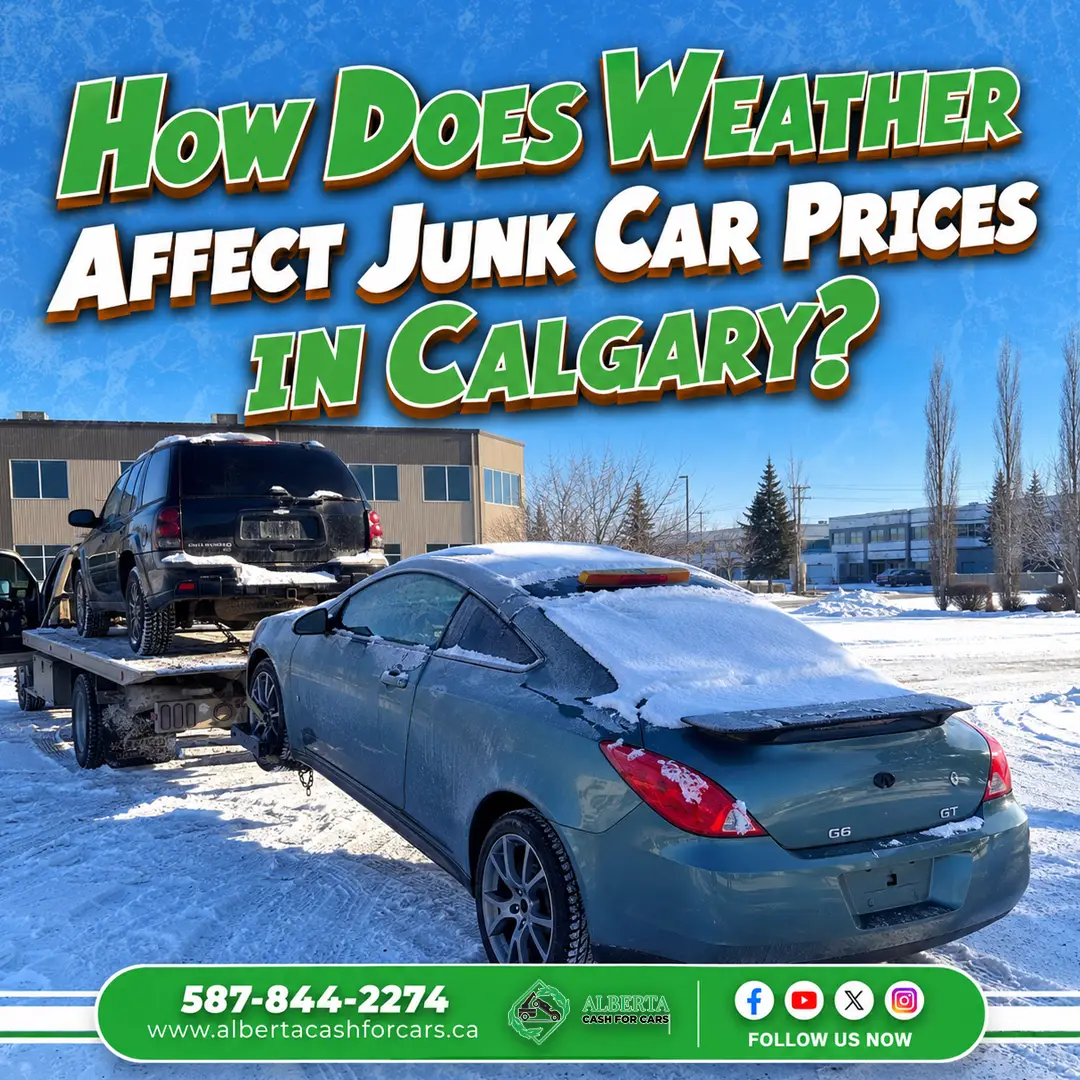
Snow accumulation and icy driveways or alleys can make a vehicle physically harder to reach for pickup, especially after a significant snowfall. This is a logistics issue rather than a value issue on its own, but a vehicle that’s buried or blocked in can delay the timeline for getting it removed and paid for.
Does Winter Affect Junk Car Value in Calgary?
Junk car value in winter can shift indirectly in Calgary, mainly through the condition changes described above, rather than through some fixed seasonal price adjustment. There’s no consistent, documented pattern showing how weather affects junk car prices in Calgary, or that junk cars are worth a set amount more or less in winter versus summer. What does happen is that a vehicle sitting outside through a Calgary winter can accumulate more rust, develop new mechanical issues, or become harder to access, and any of those things can shift what a buyer offers once they actually see the vehicle. The season itself isn’t setting the price; the condition of the specific vehicle is.
What Actually Determines Junk Car Prices in Calgary
Understanding Calgary weather and scrap car prices as two separate systems is the key to this whole topic. Junk car prices Calgary sellers see are shaped more by the market side than by the forecast.
- Scrap metal market conditions. Steel prices, which make up the base value of most junk vehicles by weight, move with global supply and demand, mill activity, and export flows, factors tracked by industry bodies like the Canadian Association of Recycling Industries. These broader market movements aren’t determined by Calgary’s local weather, although weather can affect collection and transportation logistics.
- Vehicle weight. Heavier vehicles, like full-size trucks and SUVs, generally carry more base scrap value than smaller cars simply because there’s more recoverable steel.
- Recoverable parts. Components like the catalytic converter, working electronics, and undamaged body panels may add value depending on the vehicle and current parts demand.
- Current buyer demand. Local demand for specific makes, models, and parts in Alberta’s used parts market shifts based on what buyers currently need, which has nothing to do with the weather.
Scrap metal prices and market trends in Canada and Alberta shift with global mill activity and export flows, and understanding those movements gives a much clearer picture of what’s driving your offer than the weather does.

Best Time to Sell a Junk Car in Calgary
There’s no strong evidence of reliable seasonal junk car prices in Calgary that favours one specific season for maximizing value, since the price is driven primarily by market and vehicle-specific factors rather than the calendar. What weather does affect is condition and convenience. If a vehicle is sitting outside deteriorating, whether from rust, a failing battery, or worsening mechanical issues, waiting through another Calgary winter to sell it can leave the vehicle in worse condition by the time you do, which may affect the offer regardless of any seasonal market movement. Broader timing factors beyond weather, like when is the best time to sell a car, play into this decision too.
Practical Tips for Selling a Junk Car in Calgary During Winter
If you’re planning to sell a junk car in Calgary winter conditions, a few things make the process smoother:
- Clear a path to the vehicle if you can. Shovelling around the car ahead of time helps avoid delays on pickup day, especially after a fresh snowfall.
- Mention accessibility when you call. If the vehicle is on an unplowed street, behind a snowbank, or otherwise hard to reach, let the buyer know upfront so they can plan accordingly.
- Don’t wait for a “better” season if the vehicle is deteriorating. If cold weather is actively making the vehicle worse, whether through a newly dead battery or accelerating rust, selling sooner avoids further condition loss.
- Mention any known cold-weather issues when requesting your quote. If you already know the battery is dead or fluids have frozen, mentioning it upfront helps the buyer give you an accurate number, and knowing how junk car towing actually works in snowy or icy conditions helps set expectations for the pickup itself.
FAQs
Are junk cars worth less in winter?
Does snow make it harder to sell a junk car?
Does road salt reduce a junk car's value?
Should I wait until spring to sell my junk car?
Does cold weather affect scrap metal prices?
Does weather affect scrap car prices more than the market does?
Get a Quote on Your Junk Car, Any Season
Weather shouldn’t be the reason you hold onto a junk car longer than you need to. Alberta Cash for Cars buys vehicles in any condition across Calgary and surrounding Alberta communities, with free towing regardless of season and cash or e-transfer paid on the spot. Email [email protected] or fill out our online form to get a real quote.
Conclusion
Calgary’s winters are tough on parked vehicles, and rust, dead batteries, frozen fluids, and pickup access can all affect a junk car’s condition over time. But the price you’re offered is driven mainly by scrap metal market conditions, the vehicle’s weight, its recoverable parts, and current demand, not by the season on the calendar. The practical takeaway is simple: don’t wait for a weather-driven price shift that isn’t well supported, but don’t ignore how weather is affecting your specific vehicle’s condition either. If your junk car is sitting through another Calgary winter and getting worse for it, getting a quote now rather than later usually works out better than waiting.
References
Sources
Alberta Cash for Cars uses only trusted, high-quality sources to ensure the information in our articles is accurate, reliable, and up to date.
- Environment and Climate Change Canada. Canadian Climate Normals 1981-2010: Calgary Int’l A.
https://climate.weather.gc.ca/climate_normals/results_1981_2010_e.html?stnID=2205 - City of Calgary. Road Salt Management Plan.
https://www.calgary.ca/roads/conditions/snow-ice-salt.html - Current Results. Calgary AB Average Temperatures by Month.
https://www.currentresults.com/Weather/Canada/Alberta/Places/calgary-temperatures-by-month-average.php - Current Results. Calgary AB Snowfall Totals & Snow Accumulation Averages.
https://www.currentresults.com/Weather/Canada/Alberta/Places/calgary-snowfall-totals-snow-accumulation-averages.php - Canadian Association of Recycling Industries (CARI). About CARI.
https://cari-acir.org/ - Trading Economics. Scrap Steel.
https://tradingeconomics.com/commodity/scrap-steel