


How to Increase Your Car’s Value Before Selling in Alberta

Updated on: August 19, 2026

13 mins to read

Updated on: August 19, 2026

13 mins to read
How to Increase Your Car's Value Before Selling in Alberta
Why Sellers Trust Us
How It Works

Step 1

Request a Quote

Step 2

Receive an Offer

Step 3

Schedule Pickup

Step 4

Get Paid Instantly

Step 5

Removal and Paperwork

Table of Contents

A well-prepared car can sell for meaningfully more than the same vehicle sold as-is, but most sellers either skip preparation entirely or spend money on the wrong things. Skipping it can lead to leaving value on the table that a few hours of work could have captured, while overspending on repairs a buyer will never notice, or never pay extra for, wastes money in the opposite direction. The fix isn’t doing everything possible before listing a car, but rather knowing which specific actions actually move the price and which ones don’t have much impact.

This guide walks through what to prioritize, in order of actual return, so the time and money spent on preparation translates directly into a higher offer.

If the Numbers Don't Work in Your Favor

When a vehicle’s repair costs already exceed what a private sale would realistically bring, further preparation may not be worthwhile. Cash for cars Calgary buyers evaluate vehicles based on actual condition rather than presentation, so a car that isn’t worth detailing or repairing can still receive a fair, straightforward offer. Alberta Cash for Cars serves Calgary and more than 50 Alberta communities with same-day pickup and payment before the vehicle leaves the property. Get a quote or email [email protected] for a free quote.

Start With Detailing Your Car

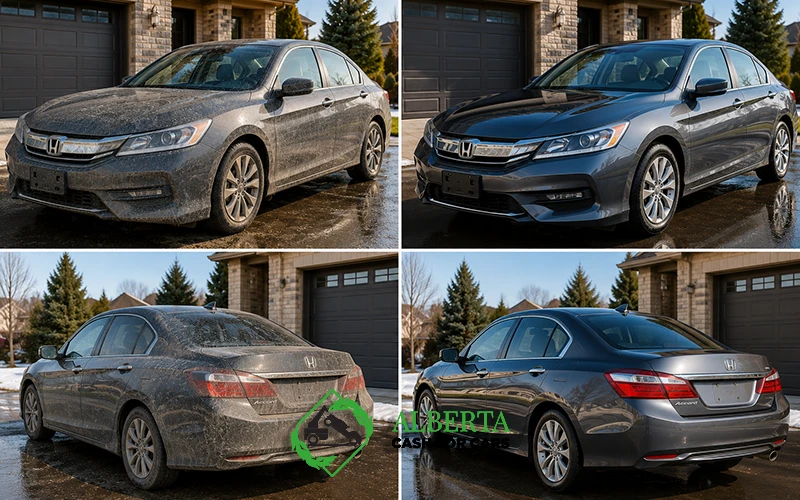
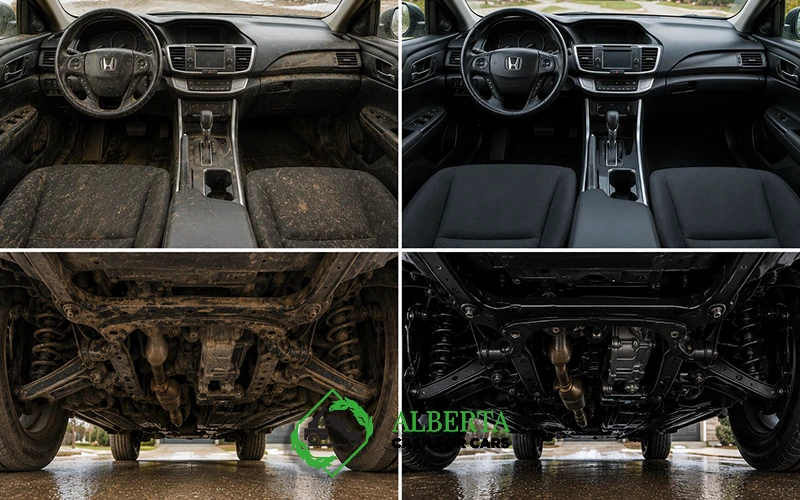
Detailing is generally the best return on investment available before a sale, which is why it’s the logical starting point. Buyers form an impression within seconds of seeing a vehicle, and that impression shapes how they judge everything else, including aspects detailing has nothing to do with, such as mechanical condition. A clean car sells faster and for more money than one that looks neglected, a pattern consistent across private vehicle sales generally, not specific to any one region. A clean, well-presented car signals a well-maintained vehicle before a buyer asks a single question, and the cost involved is small relative to the effect it has on a private sale.

Alberta adds its own wrinkle to this. Road salt, winter grime, and repeated freeze-thaw cycles leave a visible residue on Alberta vehicles that buyers in this market specifically associate with rust risk. A thorough detail that addresses undercarriage grime and salt buildup, not just the visible paint, reassures Alberta buyers in a way that matters less in provinces without the same winter road conditions.
Increase Your Car's Value

Exterior Detailing Checklist

A thorough exterior detail covers more than a standard car wash, and each step addresses something a buyer is likely to notice up close.

  1. Wash and clay bar the paint. Removes bonded contaminants a regular wash won’t touch, including road grime, tree sap, and industrial fallout.
  2. Apply a coat of wax or sealant. Restores shine and makes the paint look newer than a bare wash alone would achieve.
  3. Restore the headlights. Cloudy, oxidized headlights make a car look older than it is, and the fix is inexpensive.
  4. Clean the wheels and tires. Brake dust and grime on wheels are among the first things buyers notice up close.
  5. Wash and vacuum the trunk. Often overlooked, but a buyer checking cargo space will notice if it’s neglected.

Interior Detailing Checklist

The interior gets closer scrutiny than most sellers expect, since buyers spend more time sitting inside the vehicle than looking at the exterior during an inspection.

  1. Deep clean the seats and carpets. Stains and odors are among the fastest ways to reduce a buyer’s confidence, even when the mechanicals are sound.
  2. Wipe down the dash and door panels. Dust and grime here make a car feel neglected regardless of its actual condition.
  3. Address any lingering odors. Smoke, pet, or food smells discourage a large share of buyers.
  4. Clean the engine bay. A grimy, oil-stained engine compartment raises questions about maintenance history, even when the vehicle runs properly.

What Documents Should I Gather Before Selling?

Gathering documentation costs nothing, and it may increase a car’s value before selling more than any single repair. A well-documented history removes a buyer’s largest source of doubt: instead of guessing whether maintenance was performed, they can simply review the record. The sellers who get the firmest offers, in our experience, are almost always the ones who arrive with a service history folder, not just a freshly waxed car. This section covers what to collect and what to do if any of it is missing.

Service and Maintenance Records

Oil change receipts, dated invoices for major work, and service center printouts all count. If formal paperwork is missing, most shops can retrieve service history using the vehicle’s VIN or an account lookup, even after several years, so it’s worth checking before assuming the records are unrecoverable.

Registration Certificate

Alberta uses a registration certificate rather than a title. If yours is lost, a same-day replacement is available at any Alberta Registry Agent for a modest fee, using photo ID and the vehicle’s VIN.

Repair Invoices for Major Work

Timing belt replacement, transmission service, and brake jobs are examples of work that would normally concern a buyer if left unexplained. A dated invoice for completed work turns a potential concern into a point in the vehicle’s favor.

Warranty Documentation

If any part of the vehicle remains under a manufacturer or extended warranty, include that paperwork. A buyer who inherits active coverage is receiving real, tangible value, and it’s worth pointing out directly.

What to Do If Records Are Missing

Missing records don’t rule out this step entirely. A pre-sale inspection from a mechanic, documented and dated, establishes a starting point a buyer can trust going forward, even though it can’t recreate years of prior history.

Check Tire Condition and Fluids

Tire condition is one of the first things a buyer or their mechanic checks, and worn tires give an easy, specific reason to negotiate the price down. A few checks address this directly and help get more money for your car:

  • Check tread depth. Tires close to the legal minimum give a buyer a clear, specific negotiating point.
  • Look for uneven wear. This can indicate alignment or suspension issues, which are worth addressing or at minimum disclosing.
  • Replace tires that are genuinely near the end of their service life. Even a lower-cost, good-condition used set can close off this objection without the expense of a full new set.
  • Top up or change fluids. Oil, coolant, washer fluid, and brake fluid are inexpensive to address and signal routine upkeep.

If you’re selling during Alberta’s colder months, having a set of winter tires included, even used ones in reasonable shape, is a genuine value add in this market specifically, since a buyer facing an Alberta winter without them is factoring that cost into their offer regardless.

Individually, none of these cost much, but together they remove several specific objections a buyer would otherwise raise during an inspection.

Which Repairs Are Worth Making Before a Sale?

Not every repair pays for itself, and the right approach is matching effort to actual return rather than fixing everything or nothing. A modest detail job or an inexpensive, visible repair will routinely add more to a car’s value before selling than its cost in a private sale. A full paint job or major mechanical rebuild on an older vehicle usually doesn’t, since the car’s market value doesn’t move enough to justify the expense. The pattern to watch for across every decision in this section is repair costs that exceed what the vehicle’s market value can actually support.

Small Fixes Worth Making

Cheap, visible problems that make a buyer uneasy out of proportion to their actual cost are almost always worth fixing before a sale.

  1. Diagnose and clear any check engine light. Even for a minor issue, an active light discourages buyers before they learn what triggered it.
  2. Replace burnt-out bulbs. An inexpensive fix that avoids an easy inspection failure point.
  3. Fix loose trim or interior rattles. Individually minor, but buyers tend to associate small issues with larger, unseen ones.
  4. Address brakes that are close to needing replacement. Doing this beforehand avoids a buyer using it as leverage for a larger discount than the repair actually costs.

Repairs to Reconsider

A few categories consistently cost more than they return in a sale.

  • Full paint jobs. Expensive relative to the value added, particularly on an older vehicle where market value is already limited by age and mileage.
  • Major mechanical work on a vehicle being sold as-is. A new transmission or engine rebuild rarely returns its full cost, since buyers already price older vehicles assuming some wear.
  • Cosmetic bodywork on minor dents. Unless early buyer feedback shows it’s genuinely affecting offers, this typically costs more than it returns.

Before authorizing anything expensive, it’s worth confirming whether the repair will add more to the sale price than it costs, rather than assuming any improvement is automatically worthwhile.

Related Post:

What Should I Prioritize to Increase my Car's Value If I'm Short on Time?​

For sellers with limited time, the following order reflects where the return is highest relative to the effort involved:

  1. Interior and exterior detailing
  2. Gathering available documentation
  3. Tires and fluids
  4. Inexpensive, visible mechanical fixes such as a check engine light or burnt-out bulbs
  5. Anything beyond that, only if the numbers still make sense for the specific vehicle
Increase Your Car's Value

FAQs

What's the fastest way to increase my car's value before selling?
Professional detailing, both interior and exterior. It's a low-cost way to noticeably improve how a vehicle presents to buyers, since first impressions shape how someone judges the rest of the car, including aspects detailing has nothing to do with.
Do maintenance records actually increase resale value?
Yes. A well-documented service history removes a major source of buyer doubt about hidden mechanical problems, which often allows a seller to hold a firmer price during negotiation.
Is it worth repairing a car before selling it privately?
It depends on the specific repair. Inexpensive, visible fixes such as a check engine light or worn tires are usually worth addressing, since they remove obvious buyer objections. Expensive repairs like paint jobs or major mechanical work rarely return their full cost.
Does a professional detail really make a difference in price?
Yes. A clean, well-presented vehicle creates a stronger first impression, and buyers often use overall presentation as an indicator of mechanical condition as well, which makes detailing one of the more efficient investments a seller can make before listing a car.
Should I fix cosmetic damage before selling my car?
Small, inexpensive fixes such as bulbs or trim pieces are usually worth addressing. Larger cosmetic repairs like paint jobs or bodywork rarely pay for themselves, especially on an older vehicle where market value is already limited by age and mileage.
What repairs should I avoid doing before selling?
Full paint jobs, major mechanical rebuilds, and cosmetic bodywork on minor dents are usually not worth the cost. These repairs typically exceed what a buyer will actually pay extra for, especially on a vehicle whose market value is already limited by age.

The Bottom Line

Increasing a car’s value before selling comes down to matching effort to actual return, rather than doing everything or nothing at all. Detailing and documentation are generally the highest-return, lowest-cost steps available. Tires, fluids, and small mechanical fixes address specific buyer objections at a reasonable cost. Larger repairs, including paint jobs and major mechanical work, usually cost more than they return, particularly on an older vehicle. Knowing which category a given repair falls into before spending the money is what separates a genuinely higher offer from money spent for no measurable return.

References

Alberta Cash for Cars uses only trusted, high-quality sources to ensure the information in our articles is accurate, reliable, and up to date.

  1. CAA-Quebec – How to sell your car privately, preparation and presentation guidance
    https://www.caaquebec.com/en/advices/buying-or-selling-a-vehicle/how-to-sell-your-car-privately
  2. Canadian Black Book – vehicle valuation methodology
    https://www.canadianblackbook.com/vehicle-values/
  3. AMVIC (Alberta Motor Vehicle Industry Council) – consumer guidance on buying and selling used vehicles
    https://www.amvic.org/consumer/buying-a-vehicle/buying-used/
  4. AMVIC – general code of conduct and Consumer Protection Act obligations
    https://www.amvic.org/about-us/laws-and-regulations/general-code-of-conduct/
  5. Government of Alberta – Standard bill of sale
    https://www.alberta.ca/standard-bill-sale
  6. Government of Alberta – Duplicate Vehicle Registration Certificate
    https://eservices.alberta.ca/duplicate-vr-certificate.html

If the Numbers Don't Work in Your Favor

When a vehicle’s repair costs already exceed what a private sale would realistically bring, further preparation may not be worthwhile. Cash for cars Calgary buyers evaluate vehicles based on actual condition rather than presentation, so a car that isn’t worth detailing or repairing can still receive a fair, straightforward offer. Alberta Cash for Cars serves Calgary and more than 50 Alberta communities with same-day pickup and payment before the vehicle leaves the property. Get a quote or email [email protected] for a free quote.

We'll Buy Your Car Today
Any make. Any condition. Alberta-wide.

"*" indicates required fields

What Alberta Sellers Say

Ready to Sell Your Truck in Alberta?

We buy trucks and all vehicle types across Alberta, running, damaged, junk, or non-running. Free towing. Cash on the spot. No hassle.

Prefer to talk? Call us now:

Get Your Free Cash Offer in Minutes

"*" indicates required fields

This field is for validation purposes and should be left unchanged.

Get Your Free Cash Offer in Minutes

"*" indicates required fields

This field is for validation purposes and should be left unchanged.

Rayan Anderson

Alberta Cash For Cars Author

Alberta Cash for Cars is a Calgary-based, AMVIC-licensed vehicle buying company that purchases all vehicle types across Alberta in any condition, offering free towing and same-day cash payment.

Ryan Andersson is a Calgary-based writer specializing in automotive topics and Alberta-focused insights. He produces well-researched, fact-checked articles using reputable industry sources, market data, and local expertise to ensure accurate, practical, and trustworthy information readers can rely on.

Have Any Question?

Share:

What Alberta Sellers Say

Why Sellers Trust Us

How It Works

Step 1

Request a Quote

Step 2

Receive an Offer

Step 3

Schedule Pickup

Step 4

Get Paid Instantly

Step 5

Removal and Paperwork

Step 1

Request a Quote

Step 2

Receive an Offer

Step 3

Schedule Pickup

Step 4

Get Paid Instantly

Step 5

Removal and Paperwork

Our Recent Blog Posts

Discover quick answers, smart tips, and step-by-step insights to make selling your car easier and more profitable.

Selling an Abandoned Car in Calgary

Selling an Abandoned Car in Calgary: What Alberta Law Actually Says About Ownership

You can’t sell an abandoned car simply because it’s sitting on your property. Possession and

Do You Need to Cancel Your Car Registration After Selling in Alberta?

Do You Need to Cancel Your Car Registration After Selling in Alberta?

You sold the car, pocketed the cash, and moved on. Then three weeks later a

License Plate After Scrapping a Car

What Happens to Your License Plate After Scrapping a Car in Alberta?

Scrapping a car deals with the vehicle. Your license plate is a separate matter entirely,

Cash for Cars Payment Methods

Cash for Cars Payment Methods in Calgary: How Sellers Get Paid

Cash for cars companies in Calgary may pay by cash, Interac e-transfer, certified check, or