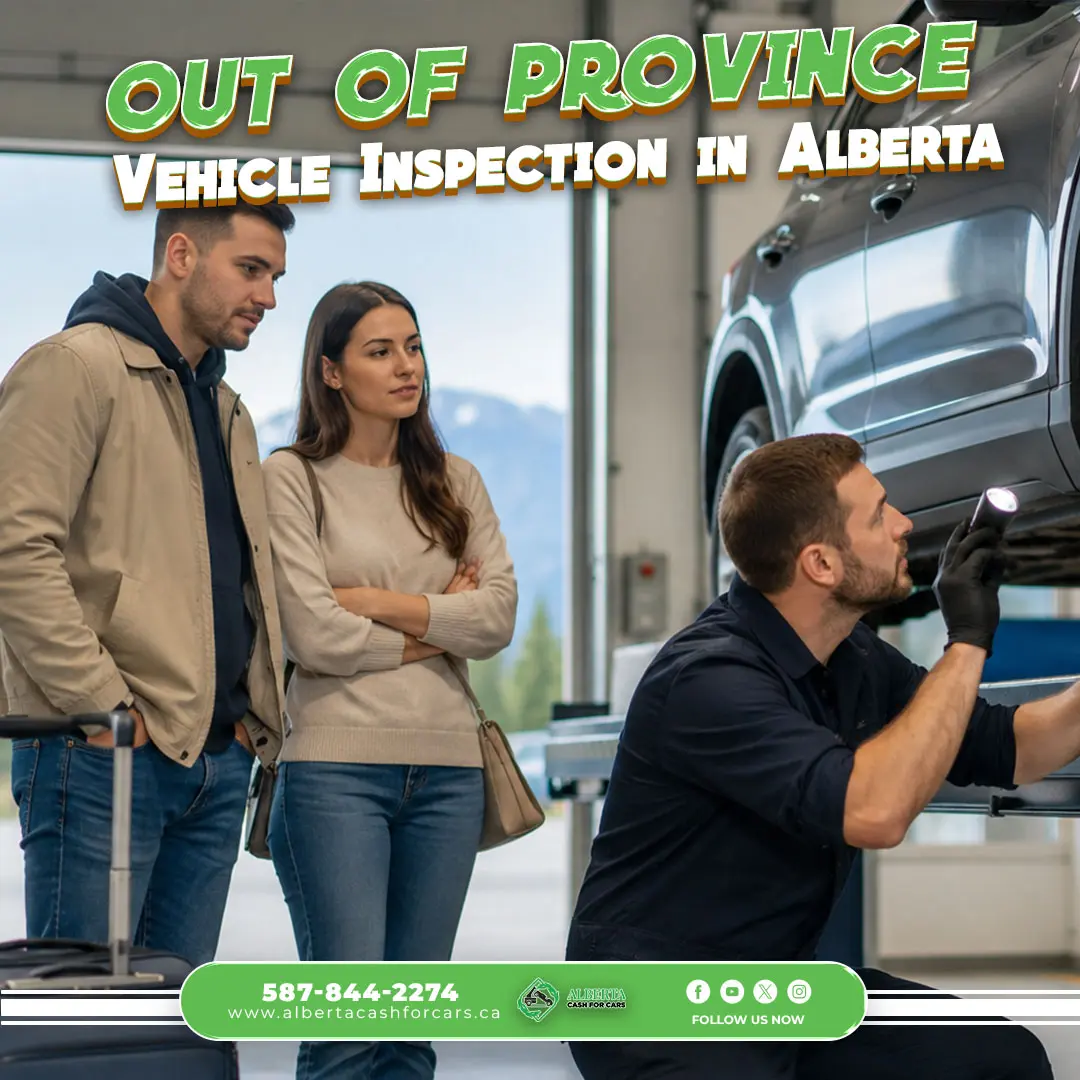


Moving to a new province is a big project, but the real problem often starts at the local registry office. Before you can get your new license plates, you are legally required to pass a vehicle inspection.
This isn’t a quick oil-change checkup. It is a strict, top-to-bottom safety audit where a single issue like a worn suspension part or a cracked windshield means the car fails straight away.
If you fail, it’s going to hurt your wallet. In many cases, you may only have a limited period to repair the issues before needing another full inspection. If you miss that deadline, you have to pay for a whole new full inspection from the beginning.
The good news is that you don’t have to cross your fingers and hope for the best. This guide explains exactly how the process works, what the inspectors look for, and gives you a simple DIY prep routine to make sure your car passes first time.
Ready to Sell? We’re Ready to Buy!
No Hassle, Just Cash – Book Your Free Pickup or Quote Today!
Check the Rules: You Might Not Even Need an Inspection
Before you book an appointment and spend your hard-earned money, it is worth pausing to see if you can skip this headache entirely.
A lot of drivers don’t realize that provinces often have agreements with one another to make moving easier. For example, if you are moving between British Columbia, Alberta, Saskatchewan, or Manitoba (under the New West Partnership), your vehicle might be exempt from an inspection. Generally, if your car is less than four years old, or if you’ve had a certified safety inspection in your home province within the last year, you can usually roll right up to the registry, show your paperwork, and get your plates without a mechanic ever touching your car.
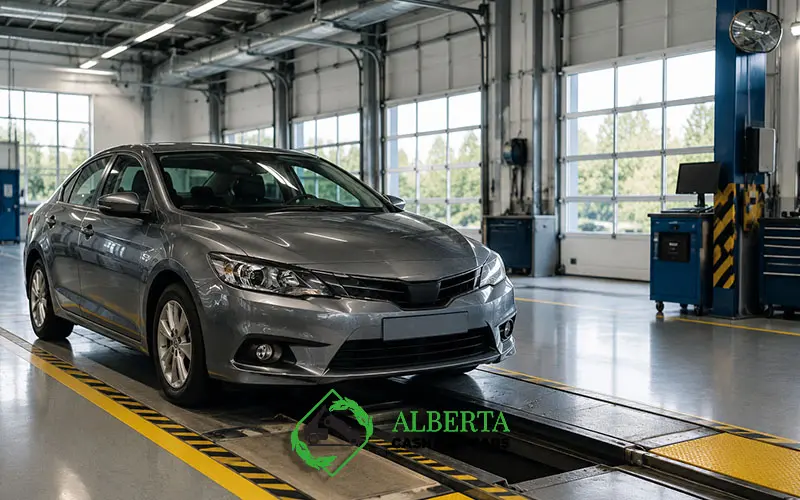
What Inspectors Check During an Out-of-Province Vehicle Inspection
When your car goes into the shop, the mechanic isn’t looking at small damage like door dings or stained carpets. They follow a government-mandated checklist to make sure the vehicle is safe for the public roads.
• Glass and Visibility: Any large crack, stone chip in the driver’s direct line of sight, or damage that interferes with the sweep of the wiper blades may fail the inspection. Side mirrors and power windows must also function flawlessly.
• Lights and Electrical: Every single bulb must work. Inspectors check the low and high beams, daytime running lights, turn signals, brake lights, hazards, reverse lights, and the small bulb that illuminates your rear license plate. Additionally, no major safety warning lights (like ABS, Airbag, or Check Engine) can be active on the dashboard.
• Brakes and Tires: The wheels are removed so the inspector can physically measure your brake pads and rotors. Tires must have a safe amount of tread depth (typically at least 1.6mm or 2/32 of an inch) with no cracks, sidewall bulges, or uneven tread wear that indicates a bad alignment.
• Steering and Suspension: The vehicle is raised on a hydraulic hoist so the technician can look for wear under the chassis. They will physically shake the wheels to check for dangerous play or looseness in the ball joints, tie rods, control arms, wheel bearings, and shock absorbers.
• Engine Bay and Undercarriage: Mechanics look under the hood and body to check for active fluid leaks (fuel, oil, brake fluid, or coolant). They also inspect the exhaust system from the engine back to ensure there are no rust holes leaking carbon monoxide before it reaches the tailpipe.
7 Things You Can Check in Your Driveway Before the Inspection
You can catch and fix the vast majority of inspection failures right at home without paying shop labor rates. Run through these seven steps before you hand over your keys.
Step 1: Secure Your Official Request Form
In many provinces, you cannot simply roll into a mechanic shop and ask for an out-of-province inspection. You must find a registry agent and physically visit the registry office first, prove your identity and vehicle ownership, and purchase an official Inspection Request Form.
Step 2: Clear the Windshield and Glass
Inspectors will fail a car instantly for glass damage. Look closely at your windshield. If you have a crack that sits directly in the driver’s line of sight, or a long crack that extends into the path of the windshield wipers, book a glass replacement before you do anything else. Ensure your side mirrors are secure and uncracked, and that all windows roll up and down smoothly.
Step 3: Test Every Single Exterior Bulb
Grab a friend or use a garage door reflection to test your lights. Turn on the vehicle and cycle through the low beams, high beams, daytime running lights, hazards, and both turn signals. Have your helper watch the rear while you step on the brakes and put the car in reverse. Don’t forget the tiny light bulb that illuminates your rear license plate it is a frequently missed item that causes automatic failures.
Step 4: Scan the Dashboard for Warning Lights
Turn the key to the accessory position to make sure all your dash lights illuminate, then start the engine. If warning lights such as ABS, airbag, or Check Engine remain on after startup, they may cause a failed inspection depending on the underlying problem. Use an OBD-II diagnostic scanner to read the fault codes, or visit a local mechanic to fix the underlying sensor or mechanical issue before booking the test.
Step 5: Measure Your Tire Tread Depth
Inspectors look for a minimum tread depth of 1.6mm (2/32 of an inch). You can test this yourself by inserting a Canadian coin into your tire tread to check its depth. Also, inspect the tire sidewalls for any visible cracks, dry rot, or unusual bulges. If your tires are wearing unevenly on one side, it means you need a wheel alignment before the test.
Step 6: Test Your Wipers and Washers
Spray your windshield fluid and turn on the wipers. The washer fluid nozzles must spray cleanly onto the glass without being blocked. The wiper blades must clear the water in a single, clean sweep without leaving streaks, tears, or blind spots across the glass. If they smudge or squeak, swap them out for a new set it takes two minutes and costs very little.
Step 7: Listen for Noises on a Quiet Test Drive
Take your vehicle on a brief drive with the radio turned completely off. Listen for any metallic grinding or squealing when you apply the brakes, which indicates worn-out pads. Pay attention to any loud clunks, rattles, or loose pops when driving over bumps, which points directly to worn-out suspension bushings or ball joints that need to be replaced.
When an Out-of-Province Inspection Becomes Too Expensive
Sometimes an Out-of-Province Vehicle Inspection uncovers more repairs than expected. Suspension problems, brake repairs, rust damage, exhaust issues, and warning lights can quickly turn an affordable vehicle into an expensive project. If the cost of getting the vehicle approved in Alberta no longer makes sense, Alberta Cash for Cars offers a simple way to move on from the vehicle without dealing with costly repairs.
- Request a free quote: Provide your vehicle details and location anywhere in Calgary or Alberta.
- Review the offer and choose a pickup time: If the offer works for you, schedule a convenient removal time.
- Let Alberta Cash for Cars handle everything else: Towing and paperwork are taken care of for you.
- Get paid on pickup: Once the vehicle is loaded, payment is made immediately.
For many Alberta drivers, this is a much simpler alternative to investing thousands of dollars into inspection-related repairs.
FAQ
How long does an Out-of-Province inspection actually take?
How long is the final certificate valid?
Can I do the repairs myself if my vehicle fails?
How long do I have to get an inspection?
Final Note
If I can give you one piece of insider advice, it’s this: clean your car inside and out before you go.
It sounds silly because cleanliness isn’t a legal metric on the inspection sheet, but psychology plays a huge role here. Mechanics are human. If you hand them a car that is caked in mud underneath, cluttered with trash on the inside, and clearly neglected, they are naturally going to look at your vehicle with a highly critical eye, expecting to find faults.
Passing an Out-of-Province Vehicle Inspection in Alberta is mostly about preparation. Problems with brakes, suspension, tires, rust, lights, and visibility are some of the biggest reasons vehicles fail, but many of these issues can be identified before the inspection if you know what to look for. Taking the time to inspect your vehicle beforehand can save you money, frustration, and repeat inspection costs.
Sources
Alberta Cash for Cars uses only trusted, high-quality sources to ensure the information in our articles is accurate, reliable, and up to date.
- Alberta: Refer to the Alberta Government Out-of-Province Vehicle Inspections Overview to find licensed technicians and download specific request regulations.
- British Columbia: Review the ICBC Vehicle Import Guide to verify provincial safety requirements, Autoplan broker rules, and New West Partnership guidelines.
- Saskatchewan: Visit SGI Vehicle Inspections to understand registration requirements for out-of-province and newly imported vehicles.
- Ontario: Check the ServiceOntario Vehicle Safety Certificates Page to learn about standard safety requirements for cross-province registration transfers.