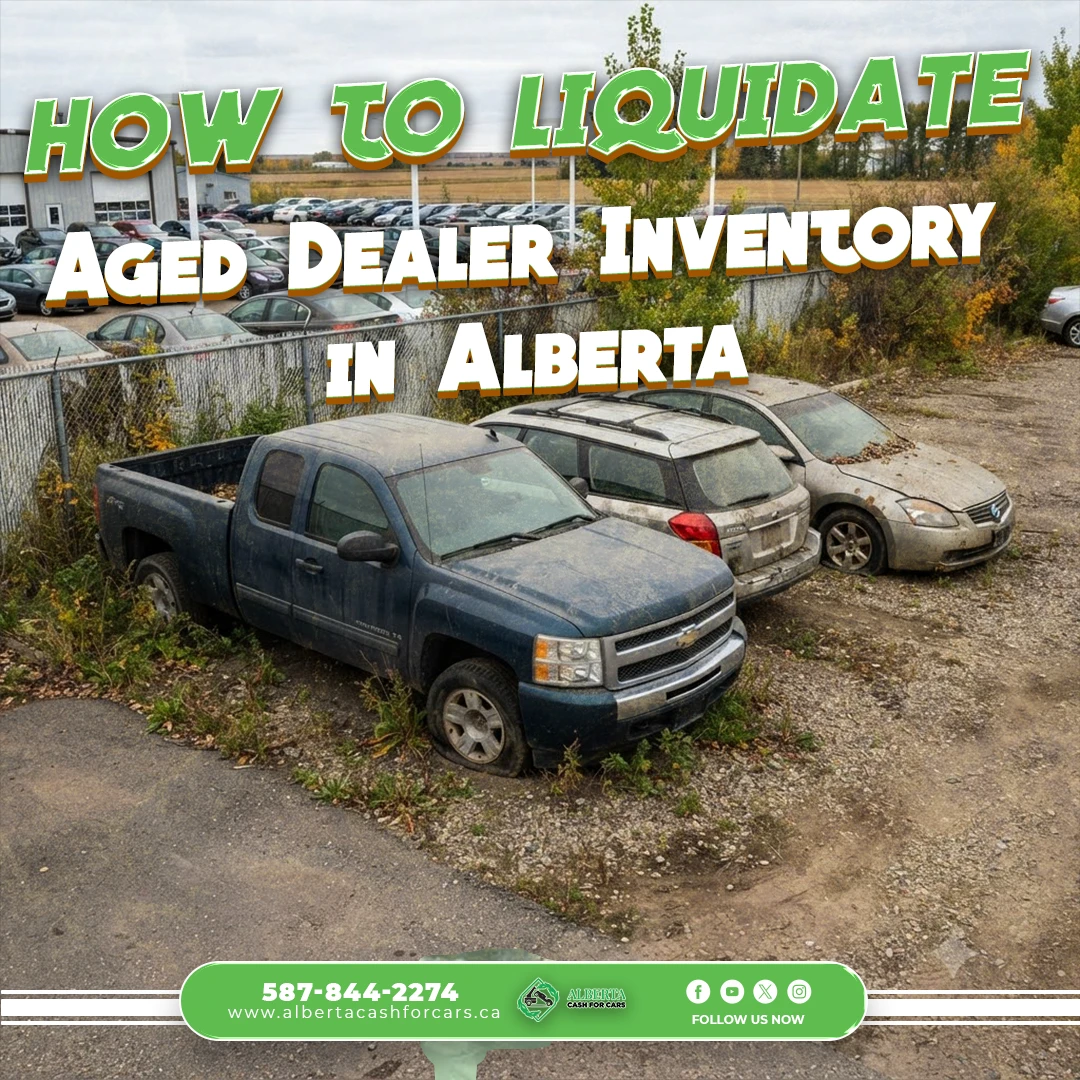




Aged inventory is one of the most preventable profit leaks in dealer operations, yet most lots carry units that have sat well past the point of no return. Non-runners, high-mileage trade-ins, and vehicles with no reconditioning budget can justify ending up parked in the corner of your lot, quietly accumulating dealer storage costs month after month. Vehicle buying services exist specifically to solve this: they’ll acquire those units quickly, handle the logistics, and pay on the spot.
In Alberta’s active used vehicle market, knowing how and when to use them makes a real difference to your inventory management and bottom line. This guide covers what you need to know to move aged stock the right way.
What Counts as Aged Inventory for Alberta Dealers
Not every slow-moving vehicle qualifies as aged inventory, but there are clear categories dealers deal with regularly:
- Non-running trade-ins with mechanical failures that exceed what reconditioning can recover
- Vehicles with salvage or flood history that can’t be resold retail under Alberta’s used vehicle rules
- Units sitting past 60 days with no qualified buyer interest
- High-mileage vehicles where the reconditioning cost outweighs the likely retail price
Alberta’s used car market keeps moving, and vehicle values don’t wait for slow decisions. Canadian Black Book’s Used Vehicle Retention Index fell 7.8% in 2024 and is projected to keep declining through 2025 and beyond, reflecting steady downward pressure on used vehicle values as supply recovers from pandemic-era lows.[^1] For aged units sitting on your lot without a buyer, that depreciation is working against you every week. Vehicle acquisition decisions that took too long, or reconditioning estimates that got ignored, are how most aged inventory is created in the first place.
How Dealer Storage Costs Add Up on Aged Units
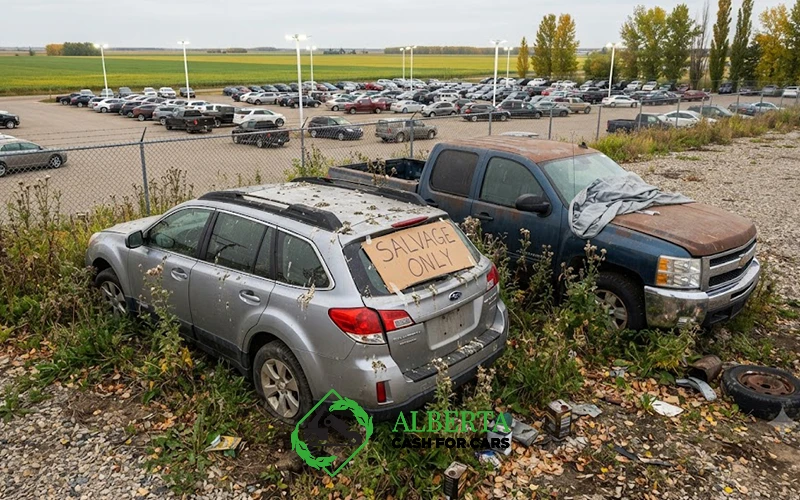
Every day a non-saleable unit sits on your lot, it’s generating costs without generating revenue. Dealer storage costs for aged inventory typically include floorplan interest, physical space that could hold a saleable unit, insurance on a vehicle that can’t move, and depreciation that compounds the longer it sits.
The AutoTrader Q1 2026 Price Index put the average used vehicle price in Canada at $36,713 at the end of March 2026, down slightly from a year earlier but still near historic highs.[^2] For a unit that’s dropped out of the saleable range entirely, every additional week parked on your lot doesn’t just stall revenue, it narrows the gap between what you can recover from it and what disposal ends up costing you. The longer it sits, the worse both numbers get.
Effective inventory management means flagging those units early and routing them through the right exit channel before carrying costs outpace any remaining value.
How Vehicle Buying Services Speed Up Inventory Liquidation
Vehicle buying services are built for exactly this situation. Unlike the automotive wholesale route, which adds steps and requires transferring to another licensed business before the unit goes anywhere, vehicle buying services can purchase directly from your dealership and handle the entire transaction in one pickup.
Here’s what the process typically looks like:
| Step | What Happens |
|---|---|
| Quote | Provide Year, Make, Model, Condition, Mileage |
| Valuation | Priced on Actual Condition, Not Just Scrap Weight |
| Confirmation | Written Quote Before Any Pickup Is Scheduled |
| Pickup | Free Towing, Even on Non-Running Units |
| Payment | Paid on the Spot at Pickup |
In our experience picking up trade-ins off Alberta lots, quotes based on actual condition, factoring in drivetrain status, usable parts, and mileage, consistently outperform phone-only estimates that default to weight alone. Dealers who get a written confirmation before pickup also avoid the last-minute renegotiations that are common in this space.
Automotive Wholesale vs Vehicle Buying Services: Key Differences
Some dealers try to route aged inventory through the automotive wholesale market before considering a buying service. Both are valid channels, but they serve different situations.
Under AMVIC’s licensing framework, wholesalers in Alberta are authorized to sell, consign, and exchange vehicles only with other automotive businesses, not directly to consumers, and must post a $50,000 security to operate.[^3] That structure adds steps and works better for units still in retail-eligible condition that just don’t fit your current lot mix.
Vehicle buying services are better suited for units that don’t belong in the wholesale channel: non-runners, high-mileage write-offs, or vehicles with salvage history. They’ll price on condition and can typically move the unit faster, without requiring your team to manage a separate wholesale relationship.
Dealer Logistics Checklist Before Scheduling a Pickup
Smooth dealer logistics at pickup come down to preparation. Before you schedule, make sure you have:
- A clear title with no outstanding liens
- A signed bill of sale ready to go
- A note of any known issues (mechanical, structural, registration status) disclosed upfront
- Written confirmation that towing is included in the quoted price
- A release of liability form prepared before the unit leaves your lot
AMVIC requires all automotive businesses in Alberta, including those transferring vehicles for disposal or resale, to maintain clear documentation standards under the Consumer Protection Act.[^3] Keeping that paperwork clean protects your dealership after the sale, especially if a unit ends up being dismantled for parts rather than resold through retail channels.
Clear Aged Inventory Off Your Alberta Lot
If you’re managing units that have been sitting too long and want a fast, fair exit, call us at +1 (587) 844-2274 or email [email protected]. We assess each vehicle based on actual condition, confirm pricing in writing before pickup, and handle the towing so the unit is off your lot without disrupting your operations.
The Bottom Line on Liquidating Aged Dealer Inventory
Aged inventory doesn’t fix itself. The longer a non-saleable unit sits, the more it costs in carrying fees, and the less you’ll recover when you finally move it. Vehicle buying services are built to take those units off your hands quickly, with pricing that reflects real condition rather than just scrap weight. Pair that with clean dealer logistics, written quotes, proper documentation, and a confirmed pickup, and you can close out aged stock faster and free up lot space for inventory that actually sells. In a used vehicle market as active as Alberta’s, that kind of turnover discipline adds up to real money over a full calendar year.
References
Sources
Alberta Cash for Cars uses only trusted, high-quality sources to ensure the information in our articles is accurate, reliable, and up to date.
- Canadian Black Book, “2025 Canadian Black Book Market Preview,” February 2025. https://www.canadianblackbook.com/2025-canadian-black-book-market-preview/
- AutoTrader.ca, “Automotive Price Index: Q1 2026,” April 2026. https://www.autotrader.ca/editorial/price-index/
- Alberta Motor Vehicle Industry Council (AMVIC), “Business License Classes,” 2024. https://www.amvic.org/business/business-licence/business-license-classes/