



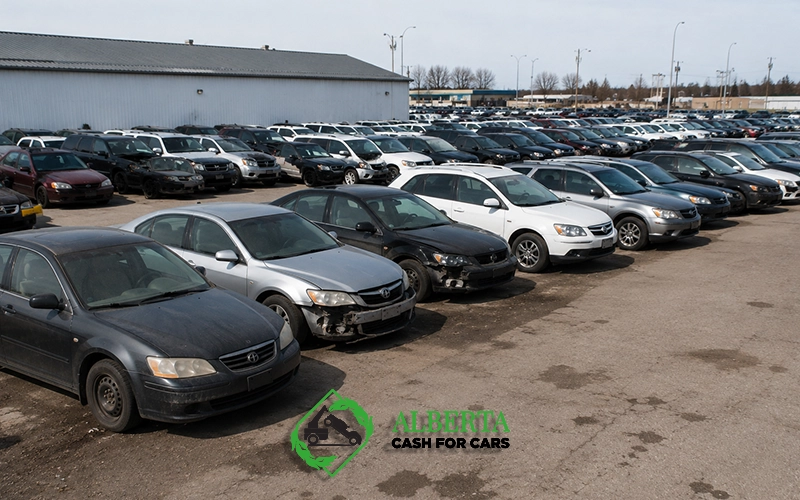
A dead trade-in sitting on your lot isn’t just an eyesore. It’s tying up space, dragging down your inventory turnover, and quietly costing you money every single day it sits there. If you manage a used car lot in Alberta, you’ve probably faced this exact problem: a vehicle that’s too rough to resell, too costly to repair, and too much hassle to move through normal channels.
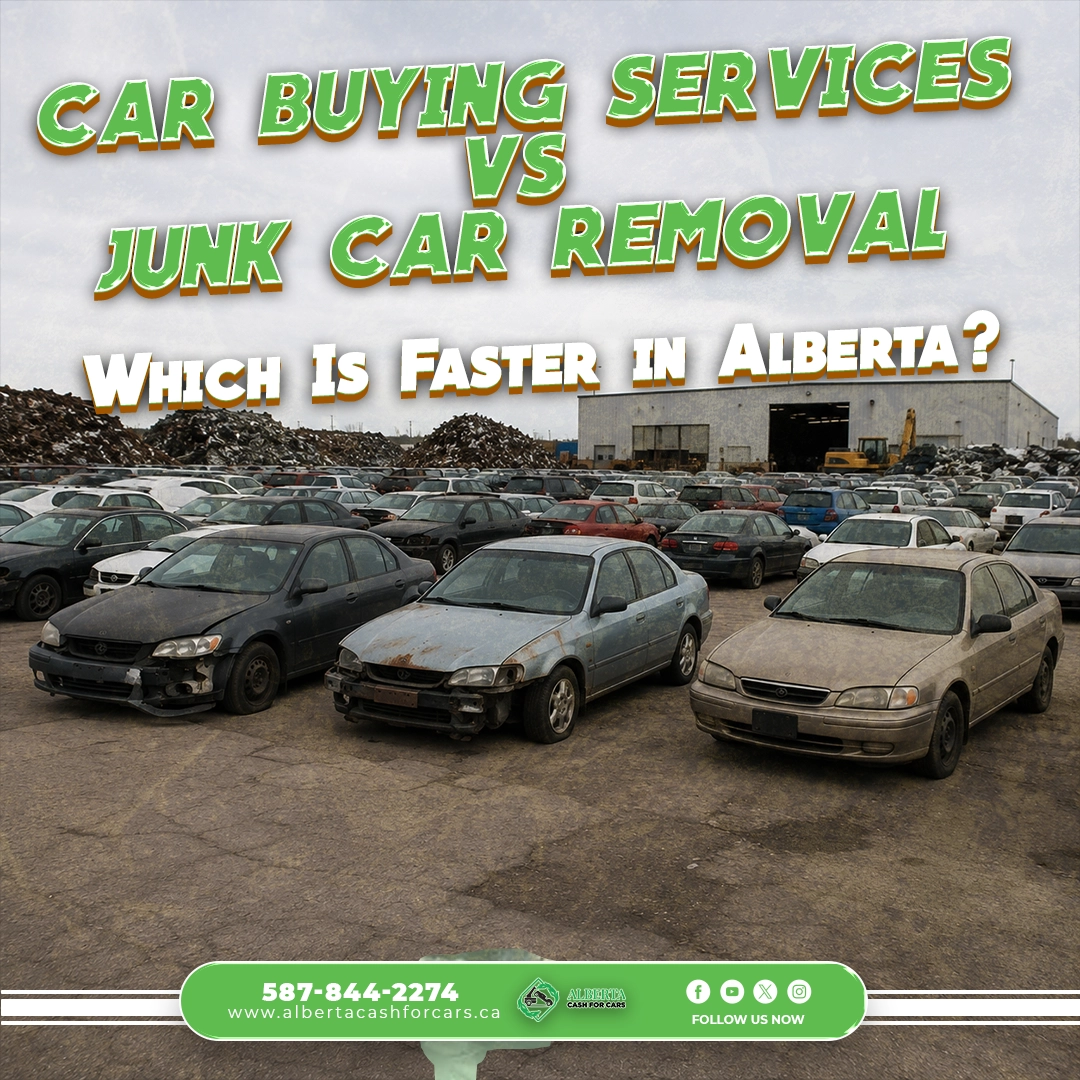
There are two common ways to deal with it: car buying services or local junk car removal. Both promise to take the vehicle off your hands, but they don’t work the same way, and picking the wrong one can cost you time, money, or both. This guide breaks down how each option actually works so you can choose the one that clears your lot fastest with the least hassle.
Why Dead Inventory Is a Bigger Problem Than It Looks
Every day a non-saleable trade-in sits on your lot, it’s costing you in ways that don’t always show up on a single line item. It’s occupying a parking spot a saleable unit could use, adding to your storage and security costs, dragging down your average days-to-sale metric, and giving browsing customers the impression that your lot carries rougher inventory than it actually does.
This problem is only growing. Drivers across Canada are holding onto their vehicles longer than ever, with the average vehicle on the road now sitting at around 10 to 11 years old, largely due to rising new vehicle prices.[^2] For lots, that translates directly into more high-mileage, end-of-life trade-ins coming through the door, units that have little to no resale potential and need to move quickly rather than linger. With registrations across Alberta’s major centres continuing to climb (Calgary alone added roughly 1.1 million registered vehicles as of March 2025, up 1.82 percent from the year before) the volume of trade-ins lots are processing isn’t slowing down either.[^1] The faster you can clear non-saleable units, the faster you free up space and capital for inventory that actually moves.
What Local Junk Car Removal Actually Involves
Local junk car removal services typically specialize in scrap and salvage vehicles. They’re built for volume and speed on units that have no resale value left.
Here’s how the process usually works:
- You contact the company and describe the vehicle’s condition.
- They provide a quote based largely on scrap metal weight and recoverable parts.
- A tow truck shows up, usually within a day or two, to haul the vehicle away.
- Payment is made on pickup, often in cash or e-transfer.
This works well for true write-offs: vehicles with blown engines, flood damage, or frame issues that no buyer would touch. The downside is that junk removal pricing typically leans heavily on scrap metal weight, with parts value playing a smaller role than it does with a dedicated car buying service. If a unit still has a usable transmission, working electronics, or low-mileage tires, that extra value often isn’t fully reflected in the offer.
What Car Buying Services Bring to the Table
Car buying services take a broader approach. Instead of evaluating a vehicle purely on weight, they assess its actual condition, including drivable units, non-running vehicles, and everything in between.
A typical car buying service process looks like this:
| Step | What Happens |
|---|---|
| Quote | You Describe the Vehicle (Year, Make, Model, Condition, Mileage) |
| Valuation | Price Is Based on Market Demand, Parts Value, and Scrap Value Combined |
| Pickup | Free Towing Is Usually Included, Even for Non-Running Vehicles |
| Payment | Paid on the Spot, No Waiting on a Cheque to Clear |
Because these services typically weigh parts value and condition more heavily alongside scrap value, they’re often able to offer better returns on vehicles that still have some life left in them, things like a recent transmission swap, decent tires, or a working catalytic converter. For lot owners and inventory managers, this matters because it directly affects your bottom line on every unit you move.
Comparing the Two Side by Side
| Factor | Local Junk Car Removal | Car Buying Services |
|---|---|---|
| Pricing Basis | Typically Priced Primarily on Scrap Weight | Parts Value, Condition, and Market Demand |
| Best For | Total Write-Offs, Non-Runners | Any Condition, Including Driveable Vehicles |
| Speed | Fast, Usually 1 to 2 Days | Often Same-Day or Next-Day |
| Towing | Sometimes Included | Typically Free, Even for Dead Vehicles |
| Payment | Cash or e-Transfer on Pickup | On-the-Spot Payment |
| Bulk Inventory Handling | Limited | Better Suited for Multiple Vehicles |
For a single beater with no salvageable parts, junk removal can be the quicker route. But for lots dealing with a steady stream of trade-ins in varying conditions, a car buying service tends to deliver more consistent value and can often handle multiple vehicles in one visit, which matters when you’re trying to clear inventory in bulk rather than one car at a time.
Old Car Selling Challenges Lot Owners Run Into
Even with a plan in place, a few recurring issues trip up dealerships and inventory managers, and most of these are things we see come up again and again when lots are clearing out trade-ins:
- Inconsistent quotes. Some buyers lowball over the phone and then renegotiate once the tow truck arrives, a tactic that’s common enough in this industry that it’s worth getting any quote confirmed in writing before pickup is scheduled.
- Slow scheduling. A few companies quote fast pickup but take days to actually show up.
- Paperwork gaps. Alberta requires AMVIC-licensed automotive businesses, including recyclers and salvage operators, to follow specific disclosure and documentation standards when vehicles change hands.[^3] Missing a bill of sale or release of liability can leave you on the hook if the vehicle changes hands again.
- Hidden towing fees. Always confirm towing is free before agreeing to a price, especially on non-running units.
Working with a service that’s upfront about pricing, pickup timing, and paperwork from the first call avoids most of these headaches entirely.
Get Your Lot Cleared Without the Runaround
If you’re managing dealership inventory and need dead trade-ins gone fast, with fair pricing and no scrap-only lowball offers, give us a call at +1 (587) 844-2274 or email [email protected]. After years of picking up trade-ins off Alberta lots, we’ve found that quoting on the spot after a quick look at mileage, drivetrain condition, and remaining parts gets sellers a fairer number than a phone quote based on weight alone, and we handle pickup so you don’t lose another day of lot space to a vehicle that isn’t moving.
The Bottom Line
Both options get a vehicle off your lot, but they’re built for different situations. Local junk car removal makes sense for vehicles that are genuinely worthless beyond scrap, and it can be the faster, simpler choice when there’s nothing left to recover. Car buying services tend to make more sense for trade-ins that still have usable parts, decent mechanicals, or partial drivability, which is increasingly common given how long owners are now keeping their vehicles before trading up. The right call comes down to the condition of the specific unit in front of you, and knowing which bucket it falls into before you make the call is what determines whether you get full value or leave some on the table.
References
Sources
Alberta Cash for Cars uses only trusted, high-quality sources to ensure the information in our articles is accurate, reliable, and up to date.
- Government of Alberta, Alberta Regional Dashboard, “Calgary – Vehicle Registrations,” 2025. https://regionaldashboard.alberta.ca/region/calgary/vehicle-registrations/
- BrokerLink, “How Long Do Cars Last in Canada?” 2026. https://www.brokerlink.ca/blog/how-long-do-cars-last-in-canada
- Alberta Motor Vehicle Industry Council (AMVIC), “Business Licence Classes,” 2024. https://www.amvic.org/business/business-licence/business-license-classes/