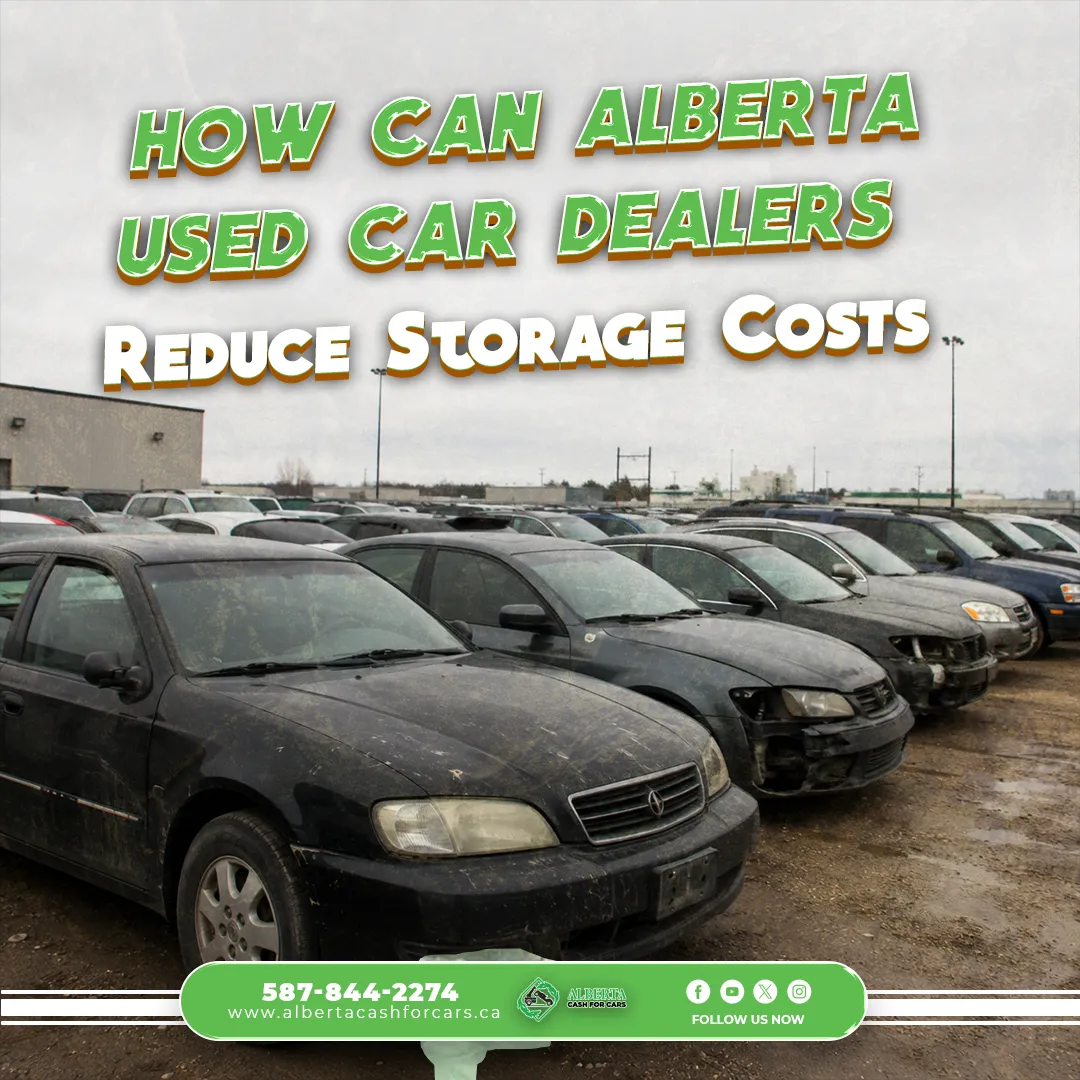





Every vehicle sitting on your lot past its prime selling window is quietly draining your bottom line. A unit that looked like a smart buy at the auction can turn into a liability within weeks, eating up floorplan interest, insurance, and lot space that fresher stock could be using instead. For small dealers and used car lots across Alberta, this slow bleed is one of the biggest threats to monthly profit, made worse by a short selling season and winter months that can stall traffic for weeks at a time. Vehicle buying services offer a practical way out, giving dealers a fast, predictable channel to move aging units without waiting on retail foot traffic. Getting this right matters more in Alberta’s market than most owners realize.
This guide breaks down exactly how to use vehicle buying services to cut storage costs and free up lot space before the next season turns over.
Why Aging Inventory Costs More Than Most Dealers Realize
Holding costs aren’t just a line item buried in overhead. They’re a daily charge that starts the moment you take ownership of a vehicle and doesn’t stop until it sells. Canadian Black Book’s 2025 market outlook projects depreciation of roughly 12% for two to six year old vehicles this year, an improvement from 15% in 2024 but still a meaningful hit on anything sitting unsold. The same report notes used vehicle supply for vehicles up to eight years old is expected to fall by 3.2% to 1.57 million units, while days’ supply has been swelling for brands carrying excess fleet inventory, a sign that turn times are getting harder to manage across the country, not just in Alberta.
On the demand side, AutoTrader’s Q3 2025 Price Index put the national average used vehicle price at $36,911, up 3.2% year over year, even as sales softened slightly across the quarter. The same report singled out Alberta as one of only two provinces, alongside Quebec, where used vehicle sales declined year over year that quarter, a trend AutoTrader linked partly to energy sector conditions rather than the tariff-driven swings affecting other regions. That’s a more direct headwind for Alberta lots than the national averages suggest, and it’s exactly the kind of softer demand that strands inventory longer than planned.
There’s no widely published Canadian figure for the precise dollar cost of holding a vehicle per day, but the floorplan interest, insurance, and depreciation mechanics behind that cost apply just as directly to a Calgary or Edmonton lot as anywhere else. US industry benchmarks from sources like NCM Associates and WardsAuto put per-day holding costs between $40 and $85, depending on the vehicle and financing structure. Treat that range as directional rather than exact, but the takeaway holds either way: a vehicle that sits an extra two weeks is costing real money, and that cost compounds the longer it goes unaddressed.

What Vehicle Buying Services Actually Do for a Dealer
Vehicle buying services are companies that purchase vehicles directly and quickly, often within a day, without the dealer needing to list, market, or wait for a retail buyer. Unlike a wholesale auction such as Manheim Edmonton or ADESA Calgary, which still involves scheduling, transport, and a final price that depends on who shows up to bid, a buying service typically gives a firm offer upfront and handles pickup. For a unit that isn’t moving at retail, that speed is the entire value proposition. We see this play out the same way on most lots we work with: the units that sat the longest are rarely the ones with a real problem, they’re just the ones nobody flagged in time.
A Step-by-Step Process for Clearing Aging Stock
Moving a unit through a buying service is straightforward once you’ve built the habit into your workflow. Here’s how the process typically plays out from the moment a vehicle gets flagged to the moment it leaves your lot.
- Flag aging units early. Most dealers use 30 to 45 days as the trigger point before a vehicle starts dragging on gross profit.
- Get a firm quote. A reputable buying service will assess condition, mileage, and current market value and respond quickly, often the same day.
- Compare against your floor, not your original cost. A unit that’s already accrued weeks of holding costs needs different math than a fresh trade-in does.
- Confirm paperwork is in order. Keep records consistent with Alberta’s Automotive Business Regulation expectations, even on wholesale-style transactions.
- Schedule pickup. Many buying services offer same-day or next-day pickup, which stops the holding cost clock almost immediately.
- Reinvest the freed-up lot space. Use the open spot for a vehicle that’s actually turning, rather than letting it sit empty or filling it with another slow mover.
When a Buying Service Beats Waiting for a Retail Sale
| Days Held Past Target | Situation | Recommended Action |
|---|---|---|
| 0–30 Days | Within Normal Retail Window | Continue Marketing as Usual |
| 31–45 Days | Holding Costs Starting to Add Up | Flag for Internal Review |
| 46–60 Days | Holding Costs Eating Noticeably Into Margin | Strong Candidate for a Buying Service Quote |
| 60+ Days | Holding Costs Often Exceed Remaining Margin | Move Quickly; Further Delay Rarely Pays Off |
Once a vehicle crosses the 45 to 60 day mark, the math usually favours a quick sale over continued holding, particularly once reconditioning, advertising spend, and ongoing depreciation are added to the daily carrying cost.
Inventory Habits That Keep Storage Costs Down All Year
A buying service solves the problem once a unit is already aging, but the better play is catching slow movers before they get there. A few habits make that easier to manage on an ongoing basis:
- Run a weekly aging report so slow movers don’t get buried in your system.
- Set a hard cutoff, such as 45 days, after which a unit automatically gets sent for a buying service quote.
- Track turn time by acquisition source (auction, trade-in, wholesale) to spot which channels are creating the most aged stock.
- Plan ahead of seasonal shifts. A unit that’s slow in November can sit through an entire Alberta winter if it isn’t dealt with before the weather turns.
None of these require new software or a big process overhaul, just a consistent weekly check-in and a clear rule for when a unit gets escalated.
Staying AMVIC-Compliant While You Move Inventory Faster
Alberta dealers operate under AMVIC and the Automotive Business Regulation, which require accurate vehicle history disclosure and a valid Mechanical Fitness Assessment for retail sales to consumers. An MFA is only valid for 120 days or 5,000 km, whichever comes first, so a vehicle that’s been sitting that long needs a fresh assessment before it can go to a retail buyer. That expiry date alone is often reason enough to move an aging unit through a buying service instead of waiting for a new MFA and another retail cycle. Even on wholesale-style sales, keeping consistent records protects your business and makes any future audit straightforward.
Ready to Clear Aging Inventory From Your Lot?
If aging stock is eating into your margins, getting a fast, no-obligation offer is the simplest way to turn that liability back into working capital. Call Alberta Cash for Cars at +1 (587) 844-2274 or email [email protected] for a quote on units that have been sitting too long. Most quotes turn around quickly, so you can free up lot space without the wait of a traditional sale.
Final Thoughts
Holding costs are one of the few profit leaks a dealer has direct control over. Whether you’re running a 20-unit lot in Edmonton or a larger operation in Calgary, the pattern is consistent across the data available: depreciation is real, supply has been tightening even as sales soften, and vehicles that sit longer than 30 to 45 days start working against your margin rather than for it. Vehicle buying services aren’t a replacement for a strong retail strategy, but they give Alberta dealers a fast, reliable way to clear the units that are dragging on monthly numbers, especially with AMVIC’s 120-day MFA clock working against anything that lingers too long. Pairing a clear aging policy with quick access to a buying service keeps your lot turning and your capital working heading into the next selling season.
Sources
Alberta Cash for Cars uses only trusted, high-quality sources to ensure the information in our articles is accurate, reliable, and up to date.
- Canadian Black Book, “2025 Canadian Black Book Market Preview,” https://www.canadianblackbook.com/2025-canadian-black-book-market-preview/
- AutoTrader Canada, “Price Index Q3 2025,” https://www.autotrader.ca/editorial
- Alberta Motor Vehicle Industry Council (AMVIC), “Buying Used,” https://www.amvic.org/consumer/buying-a-vehicle/buying-used/
- Government of Alberta, “Buying a Used Vehicle in Alberta,” https://www.alberta.ca/buying-a-used-vehicle-in-alberta
- ADESA Canada, auction locations including Calgary and Edmonton, https://www.adesa.ca/
- WardsAuto, “Combat Margin Compression by Controlling Holding Costs” (US per-day holding cost benchmarks, cited as directional industry context), https://www.wardsauto.com/dealers/combat-margin-compression-by-controlling-holding-costs