

Used Car Checklist: What to Check Before Buying a Used Car in Alberta

Updated on: July 23, 2026

13 mins to read

Updated on: July 23, 2026

13 mins to read
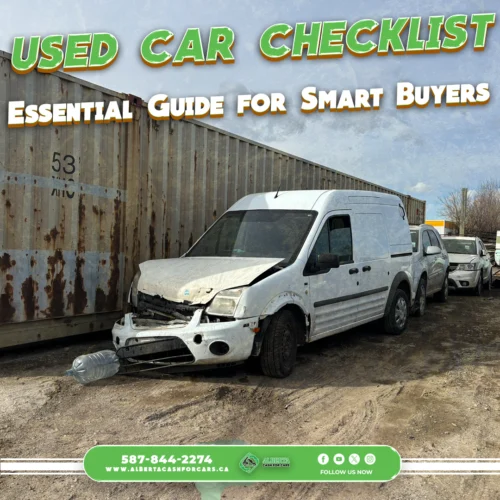
"Used Car Checklist" feature image. White damaged van for sale next to large storage containers outside.
Why Sellers Trust Us
How It Works

Step 1

Request a Quote

Step 2

Receive an Offer

Step 3

Schedule Pickup

Step 4

Get Paid Instantly

Step 5

Removal and Paperwork

Table of Contents

Every year, Albertans lose thousands of dollars buying used vehicles with problems that weren’t obvious until after the sale. A car can look clean, drive reasonably well, and still have a rough accident history, a lien outstanding against it, or mechanical wear that shows up a month later. The good news is that most of those surprises are avoidable. A proper inspection, the right history documents, and a solid test drive can tell you far more about a vehicle than a seller ever will.

In Alberta, where winters are brutal, hailstorms are common, and gravel roads are part of life, used car buyers have some extra ground to cover too. This guide walks you through exactly what to check before buying a used car so you can make a decision you won’t regret.

Ready to Sell? We’re Ready to Buy!

No Hassle, Just Cash – Book Your Free Pickup or Quote Today!

What to Check Before Buying a Used Car: A Quick Overview

Before getting into each area in detail, here’s a snapshot of what a thorough used car inspection covers:

Inspection Area What to Check
Vehicle History VIN, Accident History, Open Recalls, Liens, Service Records
Exterior Rust, Panel Gaps, Paint Consistency, Windshield, Lights
Tires Tread Depth, Uneven Wear, Age, Matching Brands
Interior Warning Lights, Electronics, Seat Belts, Heat and A/C
Under the Hood Oil Level, Coolant, Battery, Belts, Hoses, Fluid Leaks
Test Drive Steering, Brakes, Transmission, Suspension, Unusual Noises
Paperwork Bill of Sale, Registration, VIN Match, Ownership Transfer

Research the Vehicle Before You See It In Person

The best used car purchases start before you ever visit a seller. Knowing what comparable vehicles are selling for in Alberta gives you a realistic baseline and helps you spot listings that are priced suspiciously low.

Always ask for the Vehicle Identification Number (VIN) before visiting. A CARFAX Canada vehicle history report can reveal previous collisions, insurance claims, title branding, odometer inconsistencies, outstanding liens, theft records, and open safety recalls. According to Transport Canada, more than one in five vehicles currently on Canadian roads have an unresolved safety recall, so checking this before you buy is genuinely important.

If you’re buying from an AMVIC-licensed dealer (Alberta Motor Vehicle Industry Council), the dealer is required under Alberta’s Consumer Protection Act to provide you with a completed Mechanical Fitness Assessment before you sign anything. Private sellers aren’t held to this requirement, which is exactly why arranging your own pre-purchase inspection matters.

Request service records too. A seller who can show a consistent maintenance history is usually a seller who’s taken care of the vehicle.
Used Car Checklist

How to Inspect the Exterior of a Used Car

Walk around the vehicle slowly in daylight and look at each panel from a few different angles. Paint that looks slightly different in color, texture, or sheen between panels often indicates body repairs after a collision.

Check that the gaps between doors, the hood, and the trunk are consistent. Uneven gaps can point to structural damage that wasn’t fully corrected.

Focus on:

  • Rust around wheel wells, door bottoms, rocker panels, and underneath the vehicle
  • Dents, scratches, and signs of rushed repair work
  • Chips or cracks in the windshield
  • All exterior lights: headlights, brake lights, turn signals, and reverse lights
  • Tire tread depth and whether wear patterns are even across each tire

Uneven tire wear often reflects suspension or alignment problems that will need attention, so don’t overlook it.

What to Look for Inside a Used Car

Start by checking the interior before you turn the key. Look at the driver’s seat, steering wheel, and pedals. Heavy wear on these surfaces that doesn’t match the odometer reading should prompt questions.

Make sure all of the following work:

  • Power windows and locks
  • Heating and air conditioning
  • Infotainment and Bluetooth
  • Backup camera, if the vehicle has one
  • Windshield wipers and washers
  • Interior lighting and power outlets
  • All seat adjustments and seat belts

Turn the ignition to the “on” position before starting the engine. All warning lights should briefly illuminate and then switch off. Any that stay on after startup deserve follow-up.

Look for signs of water damage too: damp carpets, a musty smell, or mould anywhere in the cabin. Water damage can cause ongoing electrical problems that are expensive to track down.
Used Car Checklist

Under the Hood: What to Check Before You Buy

You don’t need to be a mechanic to catch the biggest warning signs. If possible, inspect the vehicle before it’s been started that day. A cold start reveals things that a warm engine can mask.

Check the engine oil on the dipstick. Clean oil at the right level suggests regular maintenance. Dark, gritty oil or a low level is a red flag. Look at the coolant reservoir and confirm it’s clean and filled to the marked level.

Also watch for:

  • Oil, coolant, or transmission fluid leaks anywhere under the hood or on the ground beneath the vehicle
  • Corroded or loose battery terminals
  • Cracked or worn drive belts
  • Brittle or damaged hoses
  • Loose wiring or any signs of improvised repairs

Test Drive Checklist: What You're Listening and Feeling For

A short drive around the block isn’t enough. CARFAX Canada recommends at least 30 minutes behind the wheel so you can experience different speeds, road surfaces, and traffic conditions.

During the drive, notice whether the vehicle pulls to one side when you brake, whether the transmission shifts smoothly, and whether the steering feels responsive and centered. Any clunking, grinding, rattling, or whining sound is worth taking seriously, not dismissing.

At higher speeds, the vehicle should track straight without vibration. Keep an eye on the dashboard throughout the drive. Warning lights that appear after the engine warms up are easy to clear before a test drive, which is exactly why a cold start and a longer drive are both valuable.

Paperwork to Confirm Before You Pay

Verify that the VIN stamped on the vehicle (usually visible on the dashboard at the base of the windshield) matches the VIN on the registration and any other documents. A mismatch is a serious red flag.

In Alberta, private sales require a completed bill of sale. The Government of Alberta provides a standard bill of sale template on alberta.ca. Make sure it includes the names and addresses of both parties, the VIN, vehicle description, sale price, and signatures from both buyer and seller.

One more Alberta-specific note: unlike most other provinces, Alberta charges no provincial sales tax on private used vehicle sales, so the price you agree on is what you pay, plus registration.

Red Flags That Should Make You Walk Away

Some warning signs are serious enough that no asking price makes the risk worthwhile:

  • Seller refuses to share the VIN or a vehicle history report
  • Fresh paint on only one or two panels with no explanation
  • Warning lights that stay on after startup
  • Excessive smoke from the exhaust during startup
  • Harsh shifting or slipping between gears
  • Visible fluid leaks under the vehicle
  • No service records despite claimed regular maintenance
  • Pressure to close the deal immediately

Buying a Used Car in Alberta: Local Factors Worth Checking

Alberta’s climate creates specific things to inspect that buyers in other provinces don’t always think about.

Check the hood, roof, and trunk carefully for hail damage. Cosmetic hail damage is common in Alberta and can affect resale value even when it doesn’t affect how the vehicle runs. Confirm the block heater works, because reliable cold-weather starting is non-negotiable here. Ask whether the vehicle has spent time on gravel roads, which can cause paint chips, windshield damage, and accelerated suspension wear.

If the vehicle came from another province, check for underbody corrosion. Most of Canada uses road salt in winter; Alberta uses sand instead, which means vehicles imported from Ontario or the Maritimes may carry more rust underneath than an Alberta-driven vehicle of the same age.

Sell Your Current Vehicle Without the Hassle

If you’re buying a used car and need to sell what you’re driving now, Alberta Cash for Cars makes that part straightforward. We buy cars, trucks, SUVs, vans, and scrap vehicles across Alberta in almost any condition, with free pickup and fast payment. Call +1 (587) 844-2274 or email [email protected] for a free, no-obligation quote.

Frequently Asked Questions

What should I check first when buying a used car in Alberta?
Start with the VIN. Run a CARFAX Canada vehicle history report and request a vehicle information report through a registry agent or AMA before you inspect it in person. This flags accidents, liens, theft records, and open recalls. Once the history is clear, move on to a physical inspection and test drive before committing.
Is a vehicle history report worth paying for?
Yes. A history report reveals things you can't see during a walkaround: collision claims, insurance write-offs, title branding, odometer discrepancies, and outstanding liens. It's one of the lowest-cost protections against buying a vehicle with a hidden past, and in Alberta, AMVIC recommends it for any used vehicle purchase.
Should I get a mechanic to inspect a used car before buying it?
Yes, especially for private sales. Unlike AMVIC-licensed dealers, private sellers in Alberta aren't required to provide a Mechanical Fitness Assessment. An independent pre-purchase inspection from a qualified technician can catch mechanical issues that don't show up on a test drive and give you leverage in the negotiation.
What paperwork do I need when buying a used car in Alberta?
You need a completed bill of sale, which you can download from alberta.ca, with signatures from both the buyer and seller, the full VIN, and the agreed sale price. Verify that the VIN on the bill of sale matches the vehicle's registration documents and what's stamped on the dash. Bring all of this to a registry agent to complete the ownership transfer.
What's unique about buying a used car in Alberta compared to other provinces?
Alberta has no provincial sales tax on private used vehicle sales, which simplifies pricing. However, the province's hailstorms, cold winters, and gravel roads mean you should specifically check for hail damage, block heater function, windshield chips, and suspension wear. If the vehicle has out-of-province history, underbody rust is worth a closer look since Alberta uses sand rather than salt on winter roads.
Is buying from a dealership safer than buying privately in Alberta?
There are stronger consumer protections when buying from an AMVIC-licensed dealer. They're required to provide a Mechanical Fitness Assessment, disclose collision history and any repairs over $3,000, and pay out liens before handing over the vehicle. Private sales are "as is" by default, putting the burden entirely on the buyer to do their own due diligence.

Final Thoughts

Buying a used car in Alberta comes with more moving parts than most people expect. A solid inspection covers the vehicle’s history, its exterior and interior condition, what’s happening under the hood, how it performs on a real test drive, and whether the paperwork is airtight. Layer in Alberta-specific checks, like hail damage, block heater function, gravel road wear, and corrosion from out-of-province history, and you’re genuinely well-equipped to make a confident call. No used vehicle is without some risk, but the ones who get burned are almost always the ones who skipped a step. Take your time, use the checklist, and if something feels off, there are plenty of other vehicles out there.

References

Alberta Cash for Cars uses only trusted, high-quality sources to ensure the information in our articles is accurate, reliable, and up to date.

  1. Government of Alberta. Buying a Used Vehicle in Alberta
    https://www.alberta.ca/buying-a-used-vehicle-in-alberta
  2. Government of Alberta. Buying a Vehicle from a Private Seller
    https://www.alberta.ca/buying-vehicle-private-seller
  3. Government of Alberta. Transfer Vehicle Ownership
    https://www.alberta.ca/transfer-vehicle-registration
  4. Alberta Motor Vehicle Industry Council (AMVIC). Tips for Buying a Used Vehicle (December 2025)
    https://www.amvic.org/tips-for-buying-a-used-vehicle/
  5. Alberta Motor Vehicle Industry Council (AMVIC). Buying Used
    https://www.amvic.org/consumer/buying-a-vehicle/buying-used/
  6. Transport Canada. Vehicle Safety Recalls — VIN Lookup and Recall Information (January 2025 regulation update)
    https://www.canada.ca/en/transport-canada/news/2025/02/transport-canada-makes-vehicle-safety-recall-information-more-accessible-to-canadians.html
  7. Transport Canada. Motor Vehicle Safety Recalls Database
    https://recalls-rappels.canada.ca
  8. CARFAX Canada. Steps to Buying a Used Vehicle
    https://www.carfax.ca/learn/buying/used-car-buying-guide
  9. CARFAX Canada. Used Car Value Guide — Alberta Road Conditions
    https://www.carfax.ca/learn/buying/carfax-used-car-value-guide
  10. Alberta Motor Association (AMA). Complete Car-Buying Guide: Buying a Used Car
    https://amainsider.com/complete-car-buying-guide-buying-a-used-car/
  11. Insurance Bureau of Canada. VIN Verify — Non-Repairable Vehicle Check
    https://www.ibc.ca/industry-resources/insurance-data-tools/vin-verify
We'll Buy Your Car Today
Any make. Any condition. Alberta-wide.

"*" indicates required fields

What Alberta Sellers Say

Ready to Sell Your Truck in Alberta?

We buy trucks and all vehicle types across Alberta, running, damaged, junk, or non-running. Free towing. Cash on the spot. No hassle.

Prefer to talk? Call us now:

Get Your Free Cash Offer in Minutes

"*" indicates required fields

Get Your Free Cash Offer in Minutes

"*" indicates required fields

Ryan Anderson

Alberta Cash For Cars Author

Alberta Cash for Cars is a Calgary-based, AMVIC-licensed vehicle buying company that purchases all vehicle types across Alberta in any condition, offering free towing and same-day cash payment.

Ryan Andersson is a Calgary-based writer specializing in automotive topics and Alberta-focused insights. He produces well-researched, fact-checked articles using reputable industry sources, market data, and local expertise to ensure accurate, practical, and trustworthy information readers can rely on.

Have Any Question?

Share:

What Alberta Sellers Say

Why Sellers Trust Us

How It Works

Step 1

Request a Quote

Step 2

Receive an Offer

Step 3

Schedule Pickup

Step 4

Get Paid Instantly

Step 5

Removal and Paperwork

Step 1

Request a Quote

Step 2

Receive an Offer

Step 3

Schedule Pickup

Step 4

Get Paid Instantly

Step 5

Removal and Paperwork

Our Recent Blog Posts

Discover quick answers, smart tips, and step-by-step insights to make selling your car easier and more profitable.

How to Liquidate Aged Dealer Inventory in Alberta

How to Liquidate Aged Dealer Inventory in Alberta

Aged inventory is one of the most preventable profit leaks in dealer operations, yet most

How to cut losses on junk vehicle disposal in alberta

How to Cut Losses on Junk Vehicle Disposal in Alberta

A non-running trade-in doesn’t just sit there quietly losing value. Every week it stays on

Car buying Services vs Junk Car Removal Alberta

Car Buying Services vs Junk Car Removal: Which Is Faster in Alberta?

A dead trade-in sitting on your lot isn’t just an eyesore. It’s tying up space,

Calgary Car Buying Services: Best Options for Repeat Sales

Calgary Car Buying Services: Best Options for Repeat Sales

Selling one car is simple enough. Selling several a year, whether you’re managing a small