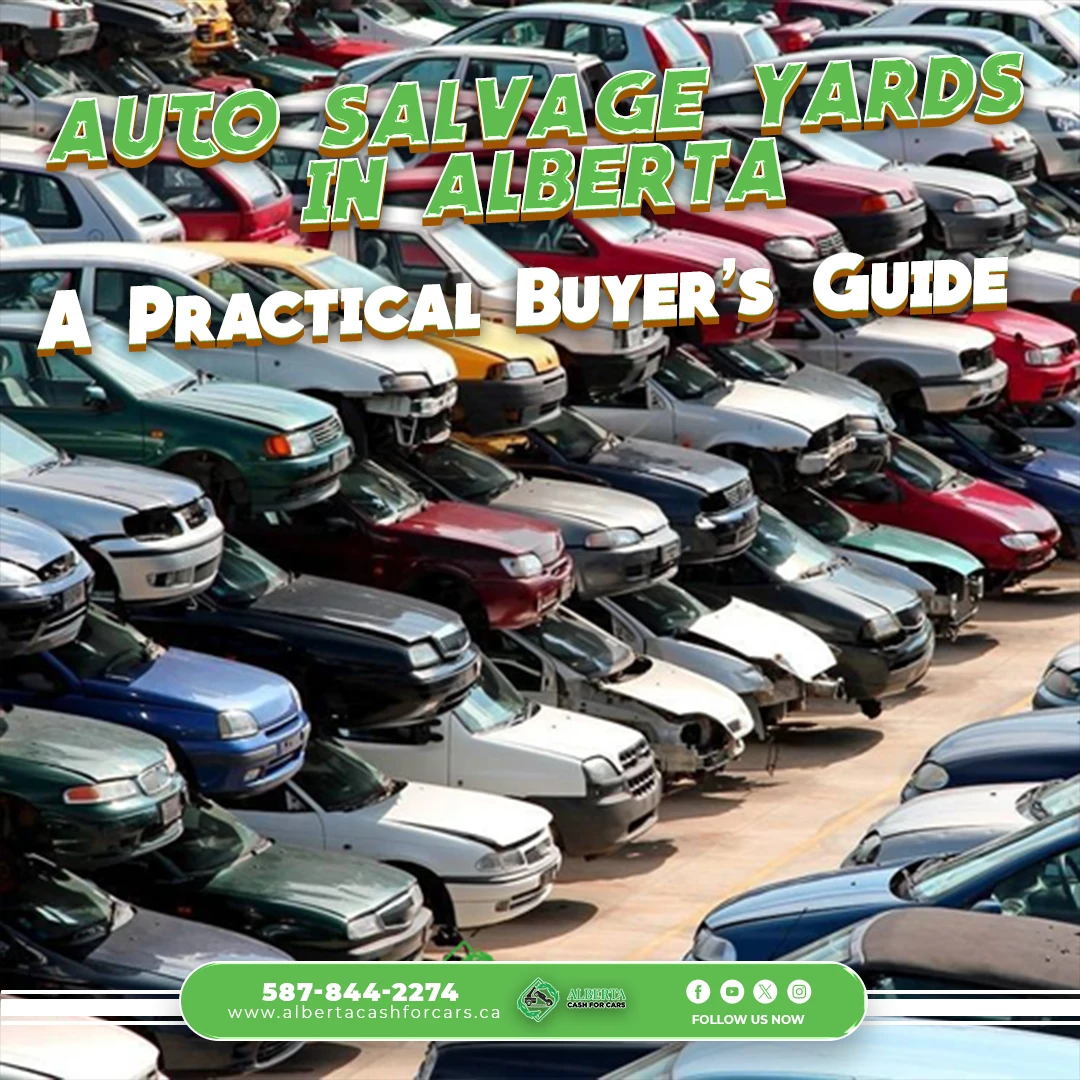



Standing in a muddy salvage yard row in February, trying to figure out if a used alternator will fit your Ford F-150, is not most people’s idea of a good afternoon. Alberta winters are hard on vehicles, and OEM parts prices have not made repairs any cheaper. This is why thousands of Albertans turn to salvage yards instead of paying dealership rates.
A salvage yard visit can save real money, but only if you walk in prepared. This guide covers what actually works, from choosing a licensed yard to knowing what to check before you pay, so your next trip is fast, safe, and worth the drive.
What Is an Auto Salvage Yard and Why Albertans Use Them
An auto salvage yard, sometimes called a wrecking yard or auto recycler, stores end of life and damaged vehicles so their usable parts can be resold. Instead of manufacturing a new part from raw steel and plastic, you buy one that already exists and simply needs to be removed and reinstalled.
The financial case is straightforward. Used and recycled auto parts generally cost between 20 and 80 percent less than comparable new parts, according to industry figures from the Automotive Recyclers Association. For an Alberta driver replacing a cracked bumper or a transmission after a hard winter, that difference can mean hundreds of dollars saved on one repair.
There is an environmental angle too. Canada generates roughly 1.6 million end of life vehicles every year, and about 95 percent of them are eventually collected for recycling.[2] With current techniques, about 90 percent of a vehicle can be reused or recycled, so parts sitting on a salvage yard shelf are directly keeping steel, aluminum, and plastic out of Alberta landfills.
Make Sure the Yard Is Properly Licensed
Before anything else, confirm the salvage yard is legitimate. In Alberta, the Alberta Motor Vehicle Industry Council (AMVIC) licenses recyclers and salvagers, along with dealers, wholesalers, brokers, and repair shops.[3] This licensing exists to protect consumers who buy parts or sell vehicles for parts.
A few quick ways to verify a yard before you drive out:
- Ask for their AMVIC license number and confirm it on the AMVIC website
- Check recent Google reviews for complaints about pricing or part condition
- Call ahead and ask if they document part sources and mileage
- Confirm they follow proper handling of fluids, batteries, and hazardous materials
Skipping this step is the biggest reason people end up with a bad part or an unfair price.
Before You Go: Preparation Tips That Actually Save Time
A little planning before you leave home turns a long, frustrating yard search into a quick, targeted one. These steps take a few minutes but can save an entire afternoon.
1. Know Exactly What You Need
Write down the part name, your vehicle’s year, make, model, and trim, and if possible the part number from your owner’s manual. Salvage yard staff can search inventory much faster when you arrive with specifics instead of a vague description.
2. Call Ahead
Most Alberta salvage yards keep a searchable inventory system. A quick phone call can confirm whether they have your part in stock, saving a wasted trip across the city or to a yard outside Calgary or Edmonton.
3. Practice the Removal at Home First
If you are replacing a part on your own vehicle, remove the old one before heading to the yard. This shows you which tools you need and can reveal hidden rust or damage before it catches you off guard on site.
4. Bring the Right Tools
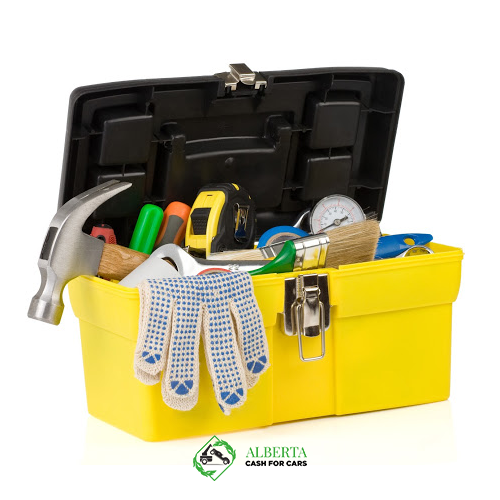
A basic salvage yard toolkit should include:
| Tool | Purpose |
|---|---|
| Socket and Wrench Set | Removing Bolted Components |
| Screwdrivers (Flat and Phillips) | Panels, Clips, and Interior Parts |
| Pry Bar | Separating Stuck or Rusted Panels |
| Cutting Tool | Cutting Wiring Harnesses or Hoses |
| Work Gloves and Safety Glasses | Protecting Hands and Eyes |
| Small Parts Bags | Keeping Bolts and Clips Organized |
5. Dress for the Yard
Long sleeves, durable pants, and closed-toe shoes are standard at most Alberta yards, since sharp metal edges and rust are common. Many yards will not let you in without closed-toe footwear.
While You're There: Getting a Fair Deal
Once you are on site, a bit of care during the inspection and payment process protects you from the two most common salvage yard mistakes: paying for a damaged part and losing small hardware you need later.
Inspect Before You Pay
Salvage yard parts come with no warranty in almost all cases. Check for cracks, corrosion, worn threads, and signs of prior repair. If it is an electrical or mechanical part, ask if there is any way to test it on site before purchase.
Compare Pricing
Salvage yard pricing varies by yard, part rarity, and vehicle demand. It is worth calling two or three yards for the same part, especially for higher value components like engines or transmissions.
Save the Small Hardware
Bolts, clips, and brackets are easy to lose and often are not included when you buy a bigger part. Bring a small labeled bag so you are not stuck ordering a bracket separately later. If you are unsure how to evaluate a used part’s condition, bringing along a friend who knows cars can prevent an expensive mistake.
Full-Service vs Self-Service Yards: Do You Need to Bring Tools?
Not every Alberta salvage yard works the same way, and knowing the difference before you go will save you a wasted trip.
Full-service yards have staff locate and remove the part for you. You call ahead, confirm the part is in stock, and pick it up at the counter. There is no need to bring tools, gloves, or work clothes since you are not the one getting hands-on with the vehicle.
Self-service or pick-a-part yards work differently. You walk the rows, find the vehicle yourself, and remove the part with your own tools. This model is common across Alberta and it usually comes with lower prices since you are doing the labor. If you are heading to one of these yards, a basic toolkit and protective gear are genuinely necessary, not just a nice-to-have.
Before you drive out, it is worth calling the yard and asking directly which model they use. A quick question like “do I pull the part myself or does staff handle that” tells you exactly what to bring and what to wear, and it prevents showing up with a toolbox you did not need or, worse, without one you did.
| Yard Type | Who Removes the Part | Tools Needed | Protective Gear Needed |
|---|---|---|---|
| Full-Service | Staff | No | Not Required |
| Self-Service (Pick-a-Part) | You | Yes | Yes |
When a Salvage Yard Isn't the Right Move
Sometimes the smarter option is not buying a part but selling the whole vehicle. If your car needs several expensive repairs at once, or if the cost of parts and labor is approaching the vehicle’s value, it may make more financial sense to sell it as is rather than keep sinking money into salvage parts.
If you have decided it is time to sell rather than repair, keep in mind that many salvage yards do not offer towing at all, and some that do will charge for it or only tow within a limited area. Alberta Cash For Cars removes that hassle entirely, offering free towing services across the province, along with same-day payment for vehicles in any condition, including non-running and parts-only cars. Call +1 (587) 844-2274 or email [email protected] to get a free quote today.
Final Thoughts
Auto salvage yards remain one of the most cost effective ways for Alberta drivers to repair a vehicle without paying dealership prices. The key is preparation. Confirm the yard is AMVIC licensed, know exactly what part you need, bring the right tools, and inspect everything carefully before paying, since most parts are sold without warranty. Beyond the savings, buying salvaged parts supports a recycling system that keeps steel, plastics, and hazardous fluids out of Alberta’s landfills. If your vehicle has reached the point where repairs no longer make sense, selling it for cash is often the more practical choice, and it is worth weighing both options honestly before committing to a repair.
FAQs
Is it legal to buy parts from any salvage yard in Alberta?
How much can I save buying used parts instead of new ones?
Do salvage yard parts come with a warranty?
Can I bring my own tools to remove a part myself?
What should I do if my car isn't worth repairing anymore?
References
Sources
Alberta Cash for Cars uses only trusted, high-quality sources to ensure the information in our articles is accurate, reliable, and up to date.
- Automotive Recyclers Association, “Industry Statistics” – a-r-a.org
- Automotive Recyclers of Canada / Canadian Auto Recycler, “The low-down on Canada’s automotive recycling industry” – canadianrecycler.ca
- READY HUB, “AMVIC and the Alberta Dealer License: A Complete Guide” – readyhub.ca
- Alberta Motor Vehicle Industry Council, “Business Licence” – amvic.org